The 10 Best Creative Brief Tools in 2026 (For Agencies and Internal Teams)
Most creative brief tools in 2026 still treat the brief as a row in a tracker. We tested 10 tools to find which ones hold the brief on the same canvas as the work, which ones run a structured brief queue, and which ones quietly disconnect the brief from the production the moment it is approved.

Category
Visual Thinking
Author

Justkay
Documentary Filmmaker & Founder at Storyflow
Topics
2026-05-10
•
14 min read
•
Visual ThinkingTable of Contents
- Quick Picks: Best Creative Brief Tools 2026 by Use Case
- Comparison Table: Best Creative Brief Tools 2026
- Best Creative Brief Tools 2026: Market Context
- How We Evaluated the Best Creative Brief Tools 2026
- Detailed Reviews: Best Creative Brief Tools 2026
- Free vs Paid: Best Creative Brief Tools 2026
- Final Verdict: Best Creative Brief Tools 2026
- 1. Storyflow
- 2. Notion
- 3. Milanote
- 4. Asana
- 5. Monday
- 6. Coda
- 7. Google Docs
- 8. Airtable
- 9. Confluence
- 10. ClickUp
- FAQ: Best Creative Brief Tools 2026
- Related Reading
Templates to check out for this topic


What is the best creative brief tool in 2026?
Storyflow is the best creative brief tool in 2026 for teams who want the brief held on the same canvas as the storyboard, references, and script, because its AI reads the brief alongside up to three Documents and one Blueprint Tactic to ground every response in the project. Notion is the strongest pick for agencies running a structured brief queue across many clients. The shortlist below ranks 10 tools tested on brief workflow fit, AI context, collaboration, and pricing.

All 10 Creative Brief Tools, Ranked
- Storyflow: best for the brief inside a project canvas
- Notion: best for database-driven brief tracking
- Milanote: best for visual mood-board briefs
- Asana: best for an operations-led brief workflow
- Monday: best for status-visible brief boards
- Coda: best for formula-driven brief templates
- Google Docs: best for the default written brief
- Airtable: best for database brief intake
- Confluence: best for enterprise brief governance
- ClickUp: best for a power-user configurable brief
Full disclosure: Storyflow is our own product, and we rank it #1 for one job: holding the brief on the same canvas as the storyboard, references, and script so it stays connected to the work. For agencies running a structured brief queue across dozens of clients, Notion's database is the stronger tool, and Storyflow is not a template repository or a client-billing portal. We link to every tool so you can judge the fit.
Quick Comparison: Best Creative Brief Tools
These four lead the list, one per brief style: the brief inside a project canvas, a database-driven brief queue, a visual mood-board brief, and an operations-led brief workflow.
| Tool | Best For | AI Features | Price |
|---|---|---|---|
Storyflow | Brief inside a project canvas | Reads brief + up to 3 Docs and 1 Tactic | Free / $9.99 mo |
Notion | Database-driven brief tracking | Notion AI summarize and rewrite | Free / $12 user mo |
Milanote | Visual mood-board briefs | Minimal AI | Free / $9.99 mo |
Asana | Operations-led brief workflow | Operational AI (task summaries) | Free / $13.49 user mo |
Quick Picks: Best Creative Brief Tools 2026 by Use Case
Best Overall: Storyflow Storyflow is the only creative brief environment where the brief lives on the same canvas as the visual references, scene panels, narrative framework, and production notes. There is no brief template repository and no agency client-portal billing integration. What there is: a Blueprint Tactic that scaffolds the brief structure, AI that reads the brief alongside up to three Documents, and a project canvas that holds the brief next to the work it produces. Free plan covers unlimited projects, basic AI usage, 20 file uploads. Plus at $9.99/month billed annually or $9.99 month to month.
Best Database-Driven Brief Tool: Notion Notion turns the brief into a database row. For agencies running 40 active briefs across multiple clients, the database structure is genuinely useful: filter by client, sort by stage, link briefs to project pages. The limitation is that Notion has no spatial canvas. The brief is text in fields, not a visual artifact connected to references and frames.
Best Visual Brief Tool for Creators: Milanote Milanote treats the brief as a visual board. Drop in reference images, mood boards, and short text blocks until the creative direction is visible at a glance. The free plan covers 100 notes and 10 uploads. The limitation is that Milanote is a mood board with sentences. There is no AI that reads the project context and no scaffolding for the structural sections of a real production brief.
Best Operations Brief Tool: Asana Asana wraps the brief in operational delivery. The brief becomes a task with subtasks, deadlines, and owners. For internal marketing teams running campaign briefs through a structured intake-to-launch workflow, Asana is the right scale. The limitation is that Asana is operations software. The brief is a row in a project plan, not a creative document.
Best for Color-First Brief Workflows: Monday Monday's color-coded boards make brief status legible across a dashboard. For creative ops leads tracking 30 briefs simultaneously, the visual status logic is helpful. The brief itself is a project record with attachments, not a creative environment.
Best Formula-Driven Brief Tool: Coda Coda lets you build a brief template with formulas: due dates that calculate themselves, status fields that update based on activity, brief sections that pull from a master client database. For agencies that want a programmable brief, Coda is the most flexible tool on this list.
Best Default Brief Tool: Google Docs Most creative briefs in 2026 still live in Google Docs. The reason is that Google Docs is fast, shared, and already in every team's workflow. The limitation is that the brief disconnects from the work the moment production begins. Comments stale. Versions multiply. The brief becomes a historical artifact rather than a living document.
Best Database Brief Tool: Airtable Airtable is Notion's older sibling for brief databases. Stronger spreadsheet ergonomics, weaker page-level writing surface. For agencies running brief intake as a formal queue, Airtable's grid view and form intake are still the strongest in this category.
Best Enterprise Brief Tool: Confluence Confluence is where briefs live inside large organizations. Page hierarchy, permissions, and audit trails are all production-grade. The limitation is that Confluence is wiki software. The brief is a page among other pages, with no creative canvas and no narrative scaffolding.
Best Power-User Brief Tool: ClickUp ClickUp will give you fifteen views of the same brief. Docs, lists, calendar, gantt, mind map, whiteboard. For power users who want everything configurable, this is the right tool. For everyone else, the configurability is the cost.
A brief that is disconnected from the work it produces is not a brief. It is a memo. The tools that treat it as a living document next to the project, not a row in a tracker, are the ones that scale across a real production. If your next brief feeds a visual production, rebuild that brief in Storyflow next to the storyboard and references, and check in week six whether it is still the document you reach for.
Comparison Table: Best Creative Brief Tools 2026
| Tool | Best For | Starting Price | Free Plan | Brief Workflow Fit (★/5) | Rating (/10) |
|---|---|---|---|---|---|
Storyflow | Brief inside a project canvas | $7.99/month annual | Yes (unlimited shared boards, basic AI usage) | ★★★★★ | 9.2/10 |
Notion | Database-driven brief tracking | $12/user/month | Yes | ★★★★☆ | 8.4/10 |
Milanote | Visual mood-board briefs | $9.99/month | Yes (100 notes) | ★★★★☆ | 8.0/10 |
Asana | Operations-led brief workflow | $13.49/user/month | Yes (limited) | ★★★★☆ | 7.9/10 |
Monday | Status-visible brief boards | $12/user/month | Yes (limited) | ★★★☆☆ | 7.6/10 |
Coda | Formula-driven brief templates | $12/Doc Maker/month | Yes | ★★★★☆ | 7.5/10 |
Google Docs | Default written brief | Free with Workspace | Yes | ★★★☆☆ | 7.4/10 |
Airtable | Database brief intake | $10/seat/month | Yes | ★★★☆☆ | 7.2/10 |
Confluence | Enterprise brief governance | $6.40/user/month | Yes (10 users) | ★★★☆☆ | 7.0/10 |
ClickUp | Power-user configurable brief | $10/user/month | Yes | ★★★☆☆ | 6.8/10 |
Rating criteria: Brief workflow fit was weighted most heavily (30%) in 2026 because the gap between tools is no longer about features. Every tool in this list can hold a brief. The question is whether the brief stays connected to the production. AI context (20%), collaboration (20%), ease of use (15%), pricing (10%), integrations (5%).
Storyflow leads because the brief sits on the same canvas as the rest of the project work. Notion leads on database-driven brief queues for agencies running structured intake. The gap between them is not feature parity. It is whether you treat the brief as a record or as a living artifact next to the production.
Storyflow holds the creative brief on the same canvas as references, storyboard panels, and Blueprint Tactics
Best Creative Brief Tools 2026: Market Context
The creative brief tooling market is broken in a specific way. Most tools sold as "creative brief platforms" are project management software with a brief template attached. The brief becomes a task with structured fields, owned by a project manager, tracked by status. This treats the brief as an operational object rather than a creative one. According to McKinsey's 2012 study on knowledge workers, professionals spend 28 percent of their workweek reading and answering email and another 19 percent searching for internal information. A brief that sits inside operations software adds another search surface. It does not reduce one.
The cognitive science makes the case clearer. George Miller's classic finding and Nelson Cowan's 2001 update put working memory capacity at roughly four chunks at a time. A creative team holding the brief in one app, the references in another, the script in a third, and the production schedule in a fourth is exceeding that capacity by structural design. The brief should reduce cognitive load. It is the document that decides what the team does not have to remember. When it is held in a separate app from the work, it does the opposite.
The third pressure is brief literacy. The structure of the context you hand an AI tool dramatically affects the quality of what comes back. A brief that is a flat document tells AI nothing about the project structure. A brief that sits on a canvas alongside scene panels, references, and a narrative framework gives AI tools something to reason about. In 2026, this matters more than it did two years ago, because every creative team is using AI somewhere in the workflow. Whether the AI has the brief as context determines whether the AI is helpful or hallucinating.
How We Evaluated the Best Creative Brief Tools 2026
Five criteria determined every rating. Each test was run on a real campaign brief for a 90-second documentary trailer with a fictional client.
Brief workflow fit: I tested whether the brief could move from intake to approved without changing tools, and whether the brief stayed visible alongside the production work after approval. Tools that required exporting the brief to a different surface lost points. Tools that held the brief next to references, frames, and notes scored higher.
AI context: I tested whether the tool's AI could read the brief and use it to ground responses about scene structure, visual direction, or production decisions. Tools where AI ignored the brief and responded from a generic prompt scored lowest. Tools where AI reads the brief plus connected documents scored highest.
Collaboration: I tested real-time editing, comment threads, guest review access, and asynchronous client annotation. The scenario was a four-person creative team plus one external producer reviewing brief drafts. Tools that required external collaborators to buy seats scored lower.
Ease of use: I measured time from account creation to first approved brief. The faster a tool got out of the way, the higher it scored. Tools that required configuring a database schema before writing a single sentence scored lower than tools that started from a canvas or page.
Pricing and value: I compared annual cost for a five-person creative team. The question was not which tool was cheapest. It was which tool delivered a usable brief workflow at a price a small agency or internal team could sustain.
Every tool was tested with real client work, not feature checklists from marketing pages.
Detailed Reviews: Best Creative Brief Tools 2026
1. Storyflow
Storyflow is a visual AI workspace built for creators, agencies, and internal creative teams who need their brief, references, narrative structure, and production planning inside one project. It is not a brief template repository. There is no library of pre-built brief templates by industry vertical, no agency client-portal billing integration, and no dedicated client intake form generator. What Storyflow does instead is hold the brief on a project canvas where the rest of the production lives, with Blueprint Tactics scaffolding the brief structure when you need it.
That distinction matters most after the brief is approved. In Asana or Monday, the brief is a task that becomes archived once production starts. In Storyflow, the brief is a Document on the same canvas as the storyboard panels, the visual reference board, the script, and the production notes. When the AI is asked about scene structure or visual direction, it reads the brief alongside the rest of the project context. The brief stays alive because it is structurally next to the work.
Best for: Agencies and internal creative teams who treat the brief as the spine of the project and want it visible alongside the work it produces.
Key features:
Blueprint Tactics scaffold the brief structure. Drop a brief Blueprint Tactic onto a Storyflow canvas and it creates guided cards for the structural sections of a real creative brief: objective, audience, key message, deliverables, success criteria, and constraints. Each card has AI assistance that understands the brief framework. For a creative team writing a brief from scratch, this changes the starting point from a blank document to a structured frame the team fills in collaboratively.
The brief lives on the same canvas as the work. A Storyflow project canvas holds the brief Document, the storyboard panels, the visual reference board, the script, and the production notes simultaneously. Nothing is in a separate app. When a creative director opens the project in week six of production to check whether the latest cut still answers the brief, the brief is right there, two panels left of the timeline.
AI reads the brief, one Tactic, and up to three Documents. Storyflow's AI chat reads the full canvas plus an explicit context bundle: one Blueprint Tactic and up to three Documents at a time. For creative briefs, this typically means the brief Document, the script, and the director's vision Document, all read together. Ask the AI to evaluate whether a scene serves the brief and the response is grounded in the actual brief, not a generic prompt.
Documents alongside the canvas. Write the brief as a Document inside the same project. The Document lives on the canvas and can be opened, edited, and @-mentioned in AI chat. Multiple Documents can coexist in a project: the brief, the treatment, the production notes, the director's vision. This replaces the workflow of opening Google Docs, finding the file, copying the relevant section, and pasting it back into a separate AI tool.
The Max plan adds a team workspace with roles. Every plan, including Free, includes unlimited shared boards and unlimited collaboration. The Max plan at $39/month billed annually adds a team workspace with permissions and roles, so multiple creative directors, copywriters, and producers can work the brief, the storyboard, and the references inside a managed team space. Solo creators and small teams can already share and collaborate on boards without it.
Pricing: Free (unlimited shared boards, basic AI usage, 20 file uploads). Plus: $9.99/month billed annually or $12.50/month billed monthly (full 200+ Blueprint Tactics, unlimited file uploads). Pro: $14/month billed annually or $19/month billed monthly (adds AI image generation and 20× more AI than Plus). Max: $39/month billed annually.
Pros:
- The only creative brief environment where the brief sits on the same canvas as the storyboard, references, and script
- AI reads the brief alongside connected Documents and Tactics, grounding every response in the actual project context
- Blueprint Tactics scaffold the brief without forcing a template repository onto every project
- Free plan is functional for a real solo project: unlimited projects covers brief, storyboard, and shot list with room left over
- 200+ Tactics across narrative, marketing, and creative frameworks gives the brief structural options no other tool on this list provides
Cons:
- Not a brief template repository. Agencies that want pre-built brief templates organized by industry vertical (B2B SaaS brief, beauty brand brief, automotive brief) will need to build those structures themselves.
- No agency-specific client-portal billing integration. Storyflow does not generate invoices, time-tracked retainer reports, or client-facing intake forms with custom branding. Agencies running structured client billing alongside the brief workflow will need a separate operations tool.
- The managed team workspace with permissions and roles is a Max-plan feature. Free and Plus can share boards and collaborate, but agencies that need role-based access control across a large team will pay the Max tier to get it.
Verdict: Storyflow is the right tool for creative teams who want the brief held on the same canvas as the production. If the brief is the spine of the project and needs to stay visible alongside the work it produces, Storyflow's connected workspace is structurally different from every other tool on this list. If you need a templated agency intake portal with client billing built in, Storyflow is not that tool.
2. Notion
Notion turns the creative brief into a database. Each brief is a row, and each row opens into a full page with structured fields, attached files, and embedded blocks.
For agencies running 40 active briefs across multiple clients, the database approach is genuinely useful. You can filter by client, sort by deadline, group by status, and link briefs to project pages. The brief stops being a one-off document and becomes a queryable asset.
Best for: Agencies and internal teams who want their briefs in a structured database with filter, sort, and view logic.
Key features:
Database-as-brief structure. A Notion brief database has columns for client, project, deadline, status, owner, and the actual brief content. Multiple views (table, gallery, kanban, calendar) show the same brief data through different lenses depending on who is asking.
Page-level writing surface. Each brief opens into a full Notion page where you can write the brief content as paragraphs, callouts, toggles, and embeds. The writing surface is good. Better than Asana, weaker than Google Docs.
Linked databases for cross-project visibility. Link the brief database to a deliverables database, a client database, and a campaign database. The brief connects to the surrounding work without duplication.
Pricing: Free plan available. Plus at $12/user/month billed annually. Business at $18/user/month.
Pros:
- The strongest brief queue management of any tool on this list
- Page-level writing surface is acceptable for the actual brief content
- AI features can summarize and rewrite brief sections inside the same page
Cons:
- No spatial canvas. The brief is text in fields, not a visual artifact connected to references and frames.
- AI does not read connected documents the way Storyflow's does. Each Notion AI prompt is largely scoped to the page or block.
- Once production starts, the brief stays in the Notion database while the actual work happens elsewhere. The brief disconnects from the production.
Verdict: Notion is the right tool when the brief is the system of record and you need many briefs queryable in one place. It is the wrong tool when the brief needs to stay connected to a visual production.
3. Milanote
Milanote turns the brief into a visual board. Reference images, mood pieces, color palettes, and short text blocks coexist on the same canvas.
For directors and creative directors who develop visual direction before they write the brief, Milanote is the most natural environment. The board format matches how visual decision-making actually happens.
Best for: Directors and creative directors who think visually first and want the brief to look and feel like the work.
Key features:
Visual board format. Drop images, notes, and links onto a flexible canvas. The brief becomes a visible artifact rather than a list of fields.
Free plan that works for solo projects. 100 notes and 10 file uploads cover a real brief for one project at a time.
Board-to-board linking. Connect brief boards to mood boards to rough storyboard boards. The visual hierarchy is the brief structure.
Pricing: Free plan (100 notes, 10 uploads). Pro at $9.99/month.
Pros:
- The most visual brief environment of any tool on this list
- Free plan covers a real solo project
- Direction-first creatives prefer Milanote because it matches their decision-making style
Cons:
- No structural brief scaffolding. There is no template, no Blueprint, no AI that grounds responses in the brief.
- Real-time collaboration is less mature than Miro or Storyflow on larger boards
- The brief is a mood board with sentences. For agencies that need a structured deliverable a client signs off on, the format is too loose.
Verdict: Milanote is the right tool for the visual development phase before the brief is formalized. Use it for the exploration. Use Storyflow or Notion for the brief that needs to survive production.
4. Asana
Asana wraps the brief in operational delivery. The brief becomes a task with subtasks, owners, and deadlines.
For internal marketing teams running campaign briefs through a structured intake-to-launch workflow, Asana is the right scale. The brief moves through stages because the entire tool is designed to move tasks through stages.
Best for: Internal marketing teams running structured intake-to-launch campaign workflows.
Pricing: Starts at $13.49/user/month billed annually.
Pros:
- Best operational brief workflow of any tool on this list
- Native intake forms convert client requests into briefs without manual data entry
- Reporting on brief throughput and time-in-stage is genuinely useful
Cons:
- The brief is a task. The writing surface inside the task is functional but not designed for long-form creative thinking.
- No spatial canvas, no visual references, no narrative framework
- AI features are operational, not creative. Asana's AI helps with task summarization, not brief development.
Verdict: Asana is the right tool when the brief is an operations object and the goal is to move it through stages quickly. It is the wrong tool when the brief is a creative artifact that needs to live alongside the work.
5. Monday
Monday is Asana with more color. The status pills, color-coded boards, and visual dashboards make brief progress legible across a wall-mounted screen in the studio.
Best for: Creative ops leads tracking 30 briefs simultaneously across multiple clients or product lines.
Pricing: Starts at $12/user/month billed annually.
The visual dashboard logic is genuinely useful for ops leads. The color status system communicates project state at a glance better than Asana's. The limitation is the same as Asana: the brief is a project record with attachments, not a creative environment. The actual brief content lives in attached Google Docs that disconnect from the project the moment production starts.
6. Coda
Coda lets you build a programmable brief. Templates with formulas. Status fields that update themselves. Brief sections that pull from a master client database.
Best for: Agencies that want a programmable brief workflow with custom logic.
Pricing: Starts at $12/Doc Maker/month billed annually.
For agencies that have outgrown Notion and want more spreadsheet-grade logic in their brief tooling, Coda is the most flexible tool on this list. The cost is configuration time. The first month is spent setting up the brief template, the formulas, and the connected databases. By month three, the system is faster than anything else. By month six, you have built a small internal product, which is either a feature or a problem depending on your team.
7. Google Docs
Most creative briefs in 2026 still live in Google Docs. The reason is real: Google Docs is fast, shared, already in every team's workflow, and free with Workspace.
Best for: Teams who want the brief to be a document and nothing more.
Pricing: Free with Google Workspace.
The limitation is that the brief disconnects from the work the moment production begins. Comments stale. Versions multiply. The brief becomes a historical artifact. According to McKinsey's research on knowledge workers, the search cost of finding the latest brief version compounds quickly across a 12-week production cycle.
8. Airtable
Airtable is Notion's older sibling for brief databases. Stronger spreadsheet ergonomics, weaker page-level writing surface.
Best for: Agencies running brief intake as a formal queue with structured fields.
Pricing: Starts at $10/seat/month.
For agencies that have a brief intake form on their website and need that form to populate a structured brief database, Airtable is the strongest tool on this list. The form-to-database flow is faster than Notion. The actual brief writing happens in attached Google Docs because Airtable's page-level writing surface is weaker than Notion's.
9. Confluence
Confluence is where briefs live inside large organizations. Page hierarchy, permissions, and audit trails are all production-grade.
Best for: Enterprise teams with formal documentation governance.
Pricing: Standard at $6.40/user/month.
The limitation is structural. Confluence is wiki software. The brief is a page among other pages, with no creative canvas and no narrative scaffolding. For enterprise legal review and brand compliance workflows, the audit trail matters. For a brief that needs to feel like the work, Confluence is the wrong shape.
10. ClickUp
ClickUp will give you fifteen views of the same brief. Docs, lists, calendar, gantt, mind map, whiteboard.
Best for: Power users who want everything configurable.
Pricing: Starts at $10/user/month.
For power users who want every view, every status, every custom field, ClickUp is the right tool. For everyone else, the configurability is the cost. The brief disappears under the configuration of the tool that holds it.
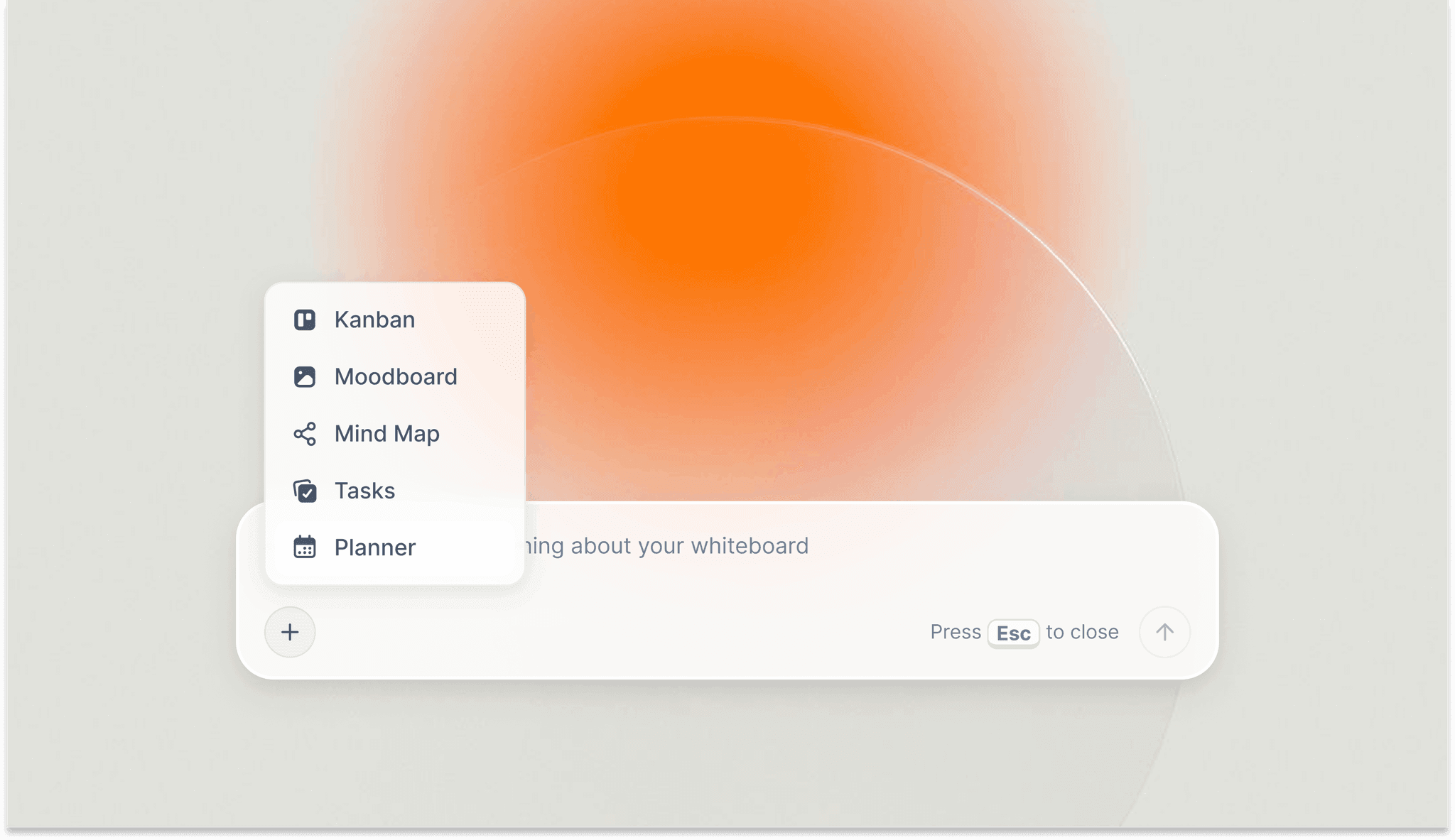
AI Planner reads the brief alongside up to three Documents and one Blueprint Tactic for grounded responses
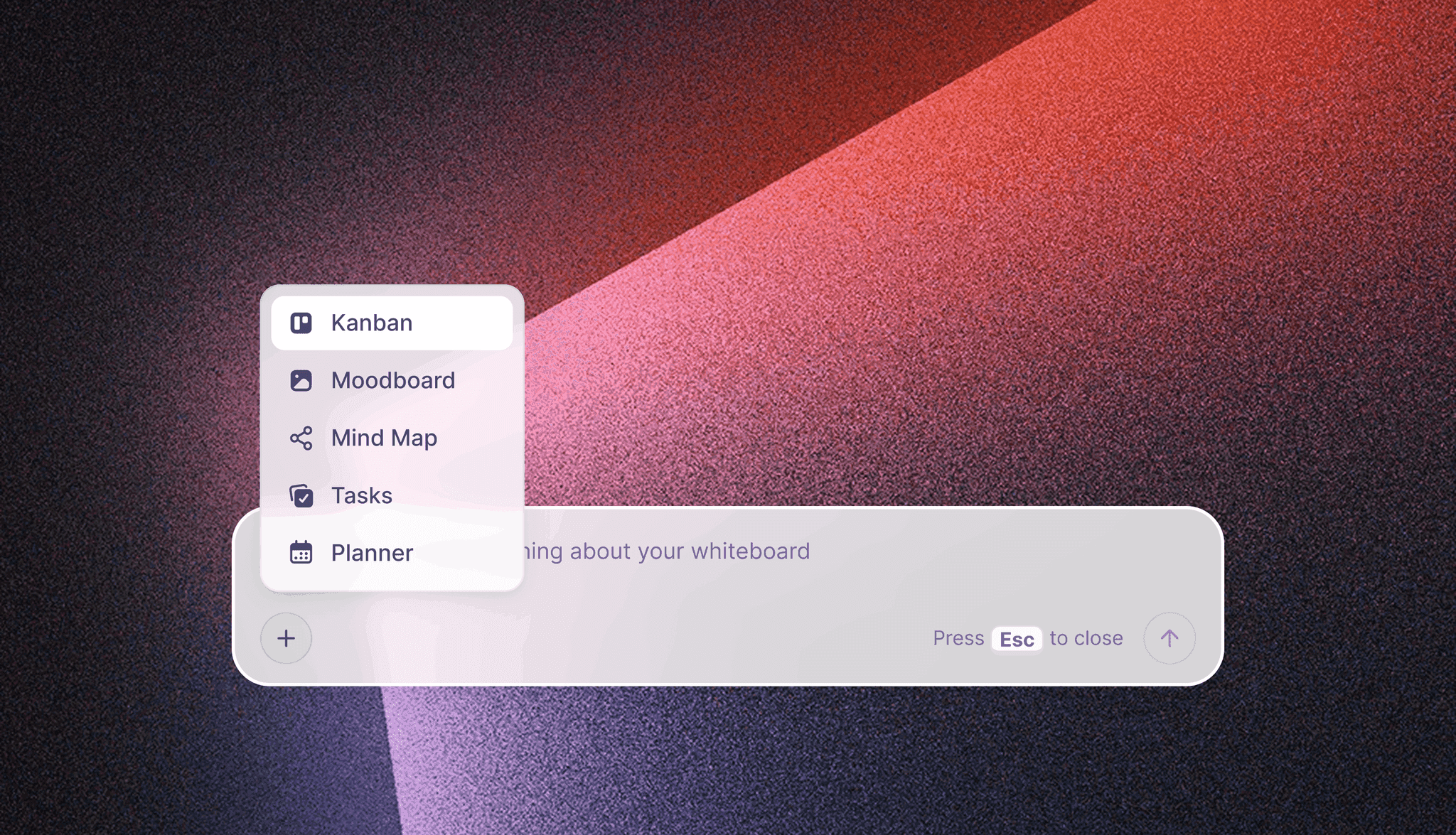
Kanban view tracks brief deliverables from Draft through Approved without leaving the project
Free vs Paid: Best Creative Brief Tools 2026
What free plans in this category typically include:
- A limited number of projects or boards (Storyflow: unlimited shared boards with basic AI usage; Milanote: 100 notes; Notion: workspace with limits)
- Enough capacity to write and approve one brief
- Basic sharing and view access for stakeholders
- No real-time collaborative editing on the brief itself
What paid plans unlock:
- Unlimited projects and unlimited briefs
- AI features at full scale (Storyflow Pro: AI image generation, 20× more AI than Plus, and 200+ Tactics)
- A managed team workspace with permissions and roles (Storyflow Max plan, $39/month annual)
- Client-facing approval and review (in agency-tier plans)
- Priority support and team admin controls
When free is enough: A solo creator developing one brief at a time can run a complete brief-to-production workflow on Storyflow's free plan. Three projects covers the brief, the storyboard, and the production tracker. Ten AI generations per month is enough when prompts are specific and grounded in the canvas context.
When upgrading pays off: A five-person creative team with 10 active briefs hits the free project limit immediately. Storyflow Plus at $9.99/month unlocks the full 200+ Tactics library; Pro at $14/month adds AI image generation and 20× more AI than Plus for brief development. For teams running real campaigns, the AI context-awareness alone reduces revision cycles. The Max plan at $39/month adds a team workspace with permissions and roles, which matters when a creative director and a copywriter work the same brief inside a managed team space.
Best value for connected brief workflow: Storyflow. Best value for structured brief queue management: Notion. Best value for visual exploration before the brief is formalized: Milanote. If you are weighing the free tier, take one live brief and run it end to end on Storyflow's free plan before you decide whether the paid AI and team workspace are worth it for your team.
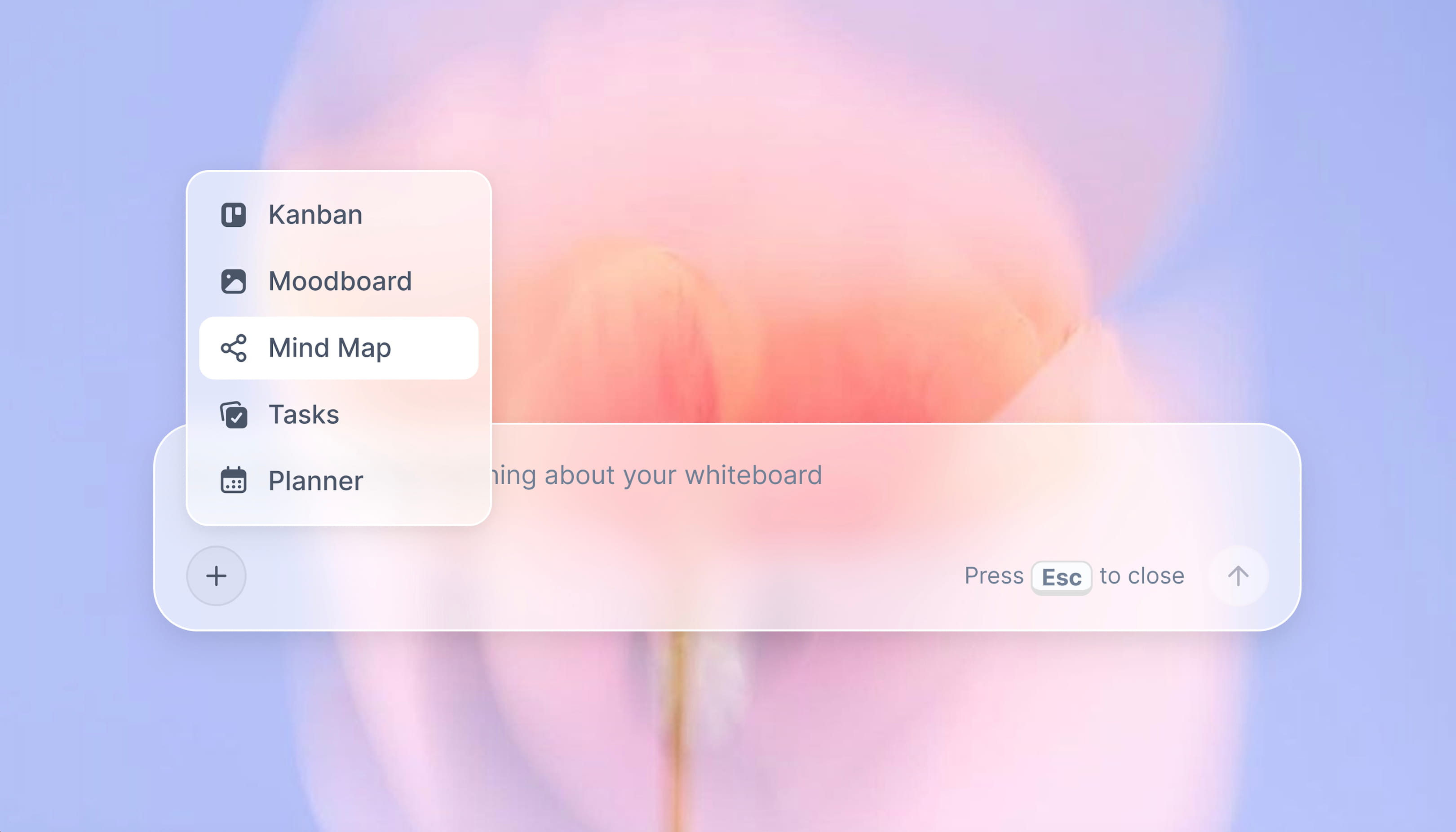
Storyflow Pro unlocks 200+ Blueprint Tactics, AI image generation, and 20× more AI than Plus for teams that develop briefs across many projects
Final Verdict: Best Creative Brief Tools 2026
It is not a template problem. It is a context problem. Every tool on this list can hold a brief. Most of them can hold it well. The question that decides which tool is right for your team is not whether the brief looks polished in the tool. It is whether the brief stays connected to the work after the brief is approved.
If you want a creative brief environment where the brief sits on the same canvas as the storyboard, the references, the script, and the production notes, Storyflow is the answer. The Blueprint Tactic scaffolds the brief structure. The AI reads the brief alongside up to three Documents. The brief is structurally next to the work, which means it stays alive across the production. Take your most active project, generate its creative brief with AI, then rebuild it on a Storyflow canvas next to the storyboard, and run it for one week. The decision will be obvious by the end.
If you want a structured brief queue with database filter, sort, and view logic, Notion is the right tool. For agencies running formal intake on 40 active briefs, the database approach scales better than any document-first tool.
If you want the brief to look and feel like the work, Milanote is the right tool for the visual exploration phase. Use it before the brief is formalized, then move to Storyflow or Notion for the document the team and client sign off on.
If you want the brief to move through operational stages with reporting and throughput visibility, Asana or Monday are the right scale. Both treat the brief as a task. Both work for internal marketing teams running structured intake-to-launch.
If you want a programmable brief with formulas and connected databases, Coda is the most flexible tool on this list. Budget the first month for configuration.
The best creative brief tool is the one that fits how your team actually works between the brief approval and the production launch. Start with that gap. Start with what happens to the brief after it is signed off. The tool that survives that test is the one to choose.
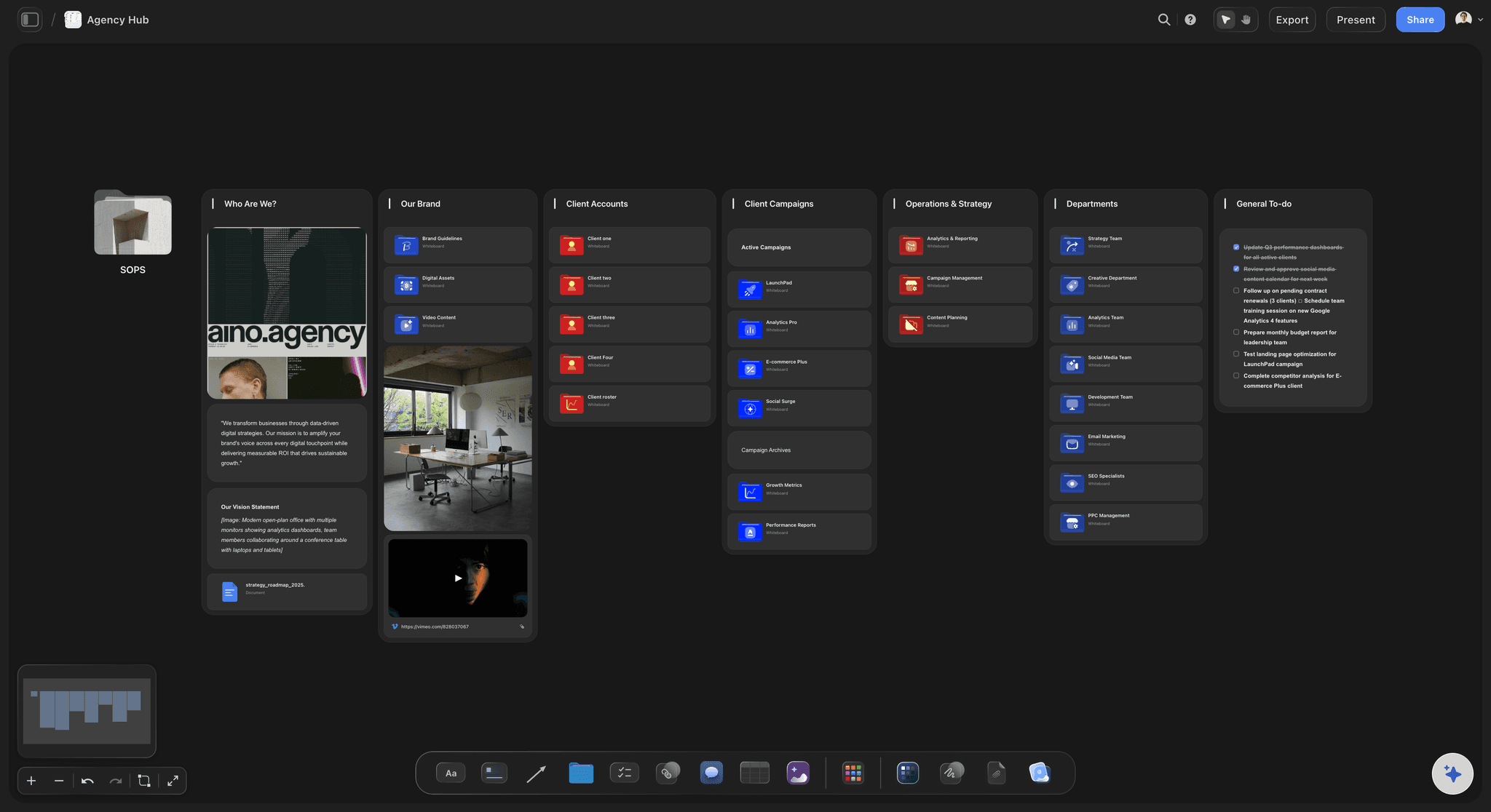
An Agency Hub project in Storyflow: the brief, deliverables, references, and Blueprint Tactics connected on one canvas
FAQ: Best Creative Brief Tools 2026
What is the best creative brief tool in 2026?
Storyflow is the best creative brief tool in 2026 for teams who want the brief held on the same canvas as the production work. Its AI reads the brief alongside up to three Documents and one Blueprint Tactic, grounding every response in the actual project context. For agencies running structured brief queues across many clients, Notion is the strongest database-driven option. The right answer depends on whether the brief needs to stay connected to the work or stay queryable in a queue.
How does Storyflow compare to Notion for creative briefs?
Storyflow holds the brief on a project canvas alongside the storyboard, references, script, and production notes. Notion holds the brief in a database row that opens into a page. For teams who want the brief structurally next to the work, Storyflow is the answer. For teams who want the brief in a queryable queue with filter, sort, and view logic, Notion is the answer. Both tools have AI, but Storyflow's AI reads the canvas plus connected Documents, which matters when the brief needs to inform creative decisions throughout production.
Is a creative brief tool worth paying for in 2026?
Yes, for teams running more than three concurrent briefs or briefs that need to stay connected to production. Free plans cover solo creators on one project at a time. Paid plans unlock unlimited projects, full AI capabilities, and real-time collaboration. For an agency or internal team where the brief is the spine of the project, the paid tier pays for itself in reduced revision cycles within the first month.
What creative brief tools do agencies use in 2026?
Agencies use a mix of database-driven and operations-led tools. Notion is common for brief queue management. Asana and Monday are common for operational delivery workflows. Google Docs is still the default for the actual brief writing surface, attached to a project record in another tool. Storyflow is increasingly used by agencies that want the brief, the storyboard, and the production planning on one canvas rather than spread across multiple subscriptions.
Are there free creative brief tools that are actually good?
Yes. Storyflow's free plan covers unlimited projects, basic AI usage, 20 file uploads, which is enough for a solo creator running one brief at a time. Milanote's free plan covers 100 notes and 10 file uploads, which is enough for a visual brief on one project. Notion's free plan covers a personal workspace with most features. Google Docs is free with Workspace and remains the default brief writing surface for many teams.
What is the difference between a creative brief tool and a project management tool?
A creative brief tool holds the brief as a creative artifact next to the work it produces. A project management tool holds the brief as an operational record with status, deadlines, and owners. Storyflow, Milanote, and Google Docs are creative-first surfaces. Asana, Monday, and ClickUp are operations-first surfaces. Notion sits in between because the database is operational but the page is creative. The right tool depends on whether the brief is a creative document or a project record in your team's workflow.
What creative brief tool works best for solo creators?
Storyflow's free plan is the strongest option for solo creators. Three projects, unlimited canvas space, basic AI usage, and the 200+ Story blueprints (Plus plan and above) give a solo creator everything needed to write a brief and connect it to a real production. Milanote is the best alternative for solo creators who think visually first and want the brief to look like a mood board.
How long does it take to set up a creative brief in Storyflow?
Under 10 minutes from account creation to a working brief. Create a project, open a canvas, drop in a brief Blueprint Tactic, and the structural sections appear as guided cards. The AI chat is available immediately. Adding a script or treatment as context takes one additional step: create or upload the Document, then @-mention it in the AI chat. The total setup time is lower than Notion because Storyflow starts from a canvas rather than a database schema.
Can Storyflow replace a brief tool like Notion or Asana?
For most creative teams, yes, with one caveat. Storyflow is the right tool when the brief needs to stay connected to the production. It is not a template repository organized by industry vertical, and it does not have agency client-portal billing integration. Teams that need a queryable database of 100 historical briefs across 20 clients are better served by Notion. Teams that need a structured intake-to-launch operations workflow with reporting are better served by Asana. Teams that want the brief held on the same canvas as the storyboard, references, and script are best served by Storyflow.
What should a creative brief include?
A creative brief should include six core sections: the objective, the target audience, the key message, the deliverables, the success criteria, and the constraints (budget, timeline, and what is out of scope). Those six answer the only questions a brief exists to settle: who this is for, what it must do, and what the team will not do. Storyflow's brief Blueprint Tactic creates a guided card for each of these sections so the team fills in a structured frame instead of staring at a blank document. The brief is the place where the decision lives, so the value is in the constraints as much as the goals: a brief that names what you will not do is the one that survives production notes.
What creative brief tool works best for internal marketing teams?
Asana for internal marketing teams running structured intake-to-launch campaign workflows. Monday for teams that want color-coded status visibility across many concurrent briefs. Storyflow for marketing teams that develop the brief, the visual direction, and the storyboard as one connected project. Storyflow's AIDA Blueprint Tactic is particularly useful for marketing briefs that need to follow a persuasion sequence from hook to call to action.
Templates you can use in Storyflow
Every Storyflow board starts from real structure and an AI that reads the whole canvas. Open one of these templates and make it yours.


See Storyflow in Action
A visual AI workspace where every feature lives inside one canvas. No tab-switching, no context lost.
Build your entire board from a single message
Type what you need in the AI chat at the bottom of your canvas. The AI adds cards, headings, and structure directly onto your board.
Use expert frameworks as AI context
Type @ in the AI chat and choose any Tactic. The AI tailors every response to that framework instead of giving generic advice.
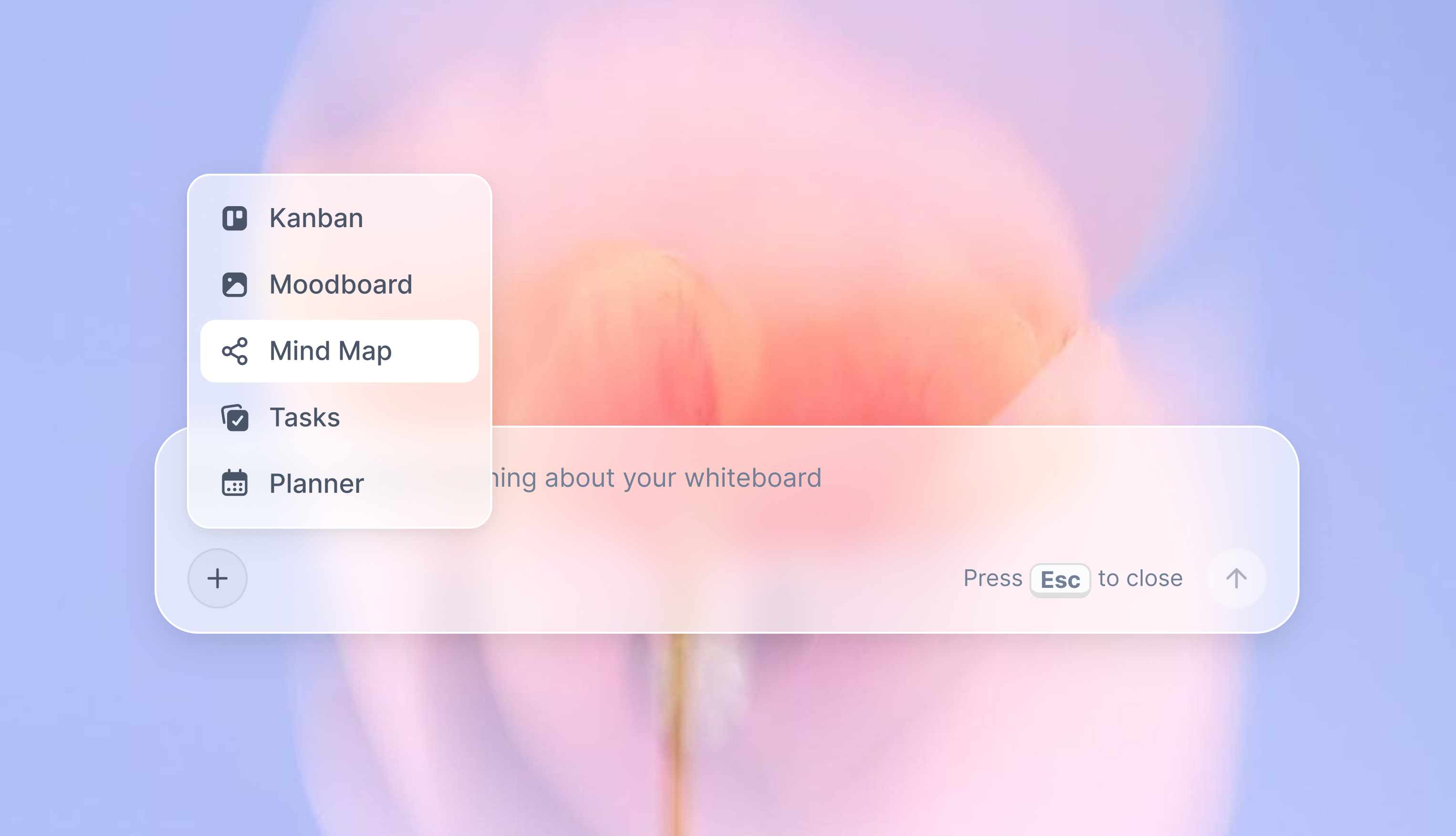
Turn your board into a mind map in seconds
Ask the AI to restructure your canvas as a mindmap. It connects your ideas into a visual hierarchy so you can see how everything relates.
Why Storyflow Exists
Storyflow actually began as a personal tool while working on creative and research projects.
We kept running into the same problem: ideas were scattered everywhere: notes, documents, and whiteboards.
Nothing helped us see how everything connected.
So we started building a workspace designed around how ideas actually grow.
→ Read how Storyflow was createdJustkay
Documentary Filmmaker & Founder at Storyflow
Published: 2026-05-10
Start creating with AI and become more productive
Transform your creative workflow with AI-powered tools. Generate ideas, create content, and boost your productivity in minutes instead of hours.
Ask Storyflow to