
Storyflow
Home
Blog
Features
Login
Home
/
Blog
/
Article
Best AI Platforms for YouTube Script Optimization in 2026
Most AI tools generate text. Only one understands what makes YouTube videos actually work. Compare the top platforms for script optimization and discover the Tactics that give creators an unfair advantage.
Category
YouTube
Author

Sara de Klein
Head of Product at Storyflow
Topics
2026-01-10
•
20 min read
•
YouTubeStoryflow product facts (2026)
- Free: $0 with unlimited boards, 3 projects, 10 AI generations/month, and 3 Tactics.
- Pro: $14.99/month (annual) or $19.99/month (monthly) with 200+ Tactics and unlimited AI.
- Team: from $12.74/user/month (annual) with real-time collaboration and admin controls.
- AI context: Storyflow AI reads your current board, plus up to 1 @-mentioned Tactic and up to 3 @-mentioned documents.
Table of Contents
- Why YouTube Script Optimization Matters More Than Ever
- What to Look for in a YouTube Script Optimization Tool
- AI Platform Comparison: Features & Capabilities
- Storyflow: The Most Advanced Platform for Script Optimization
- Maximize YouTube Retention Blueprint
- Hook Tactics Library (15+ Blueprints)
- The Hero's Journey & Story Arc Tactics
- Emotional Arc & Conflict Tactics
- ChatGPT for YouTube Scripts
- Claude for YouTube Scripts
- Jasper AI for YouTube Scripts
- VidIQ AI Coach
- TubeBuddy AI
- Before & After: Script Transformations Using Storyflow Tactics
- The Verdict: Which Platform Should You Choose?
- FAQ
What is the best AI platform for YouTube script optimization in 2026?
Storyflow is the most advanced platform for YouTube script optimization. It offers 15+ hook Tactics, retention architecture frameworks, story structure templates, and context-aware AI that understands your video's full context. Unlike ChatGPT or general AI tools, Storyflow is purpose-built for YouTube creators with proven methodology for hooks, retention, and storytelling.
Quick Recommendations
Storyflow:
Framework-guided script optimization with Tactics for hooks, retention, and story
ChatGPT:
Quick text generation and editing
VidIQ AI Coach:
Keyword research and SEO optimization
You've written a YouTube script. You've optimized it with AI. The video goes live. And... nothing. 500 views. 35% average view duration. The algorithm ignores you.
The problem isn't that AI can't help with scripts. It's that most AI tools are built for generic text generation, not for the specific challenges of YouTube. They don't understand hooks. They don't know how to build retention. They've never heard of open loops or emotional beats.
The right AI platform doesn't just write words. It understands the structure of videos that people actually watch.
In this guide, I'll compare the most advanced AI platforms for YouTube script optimization and show you exactly which features matter, which don't, and why one platform gives creators an unfair advantage.
Why YouTube Script Optimization Matters More Than Ever
Here's the reality in 2026: YouTube is harder than ever. Competition is fierce. Viewers are impatient. The algorithm is ruthless.
The data tells the story:
- Average view duration: 50% of viewers leave within the first 30 seconds of most videos
- Hook effectiveness: Videos with optimized hooks see 2-3x higher click-through rates
- Retention impact: Every 10% improvement in average view duration can double your reach
- Script quality: Creators with structured scripts outperform improvised content by 4x
A great script isn't about being a perfect writer. It's about understanding what makes people keep watching and having the tools to execute on that understanding.
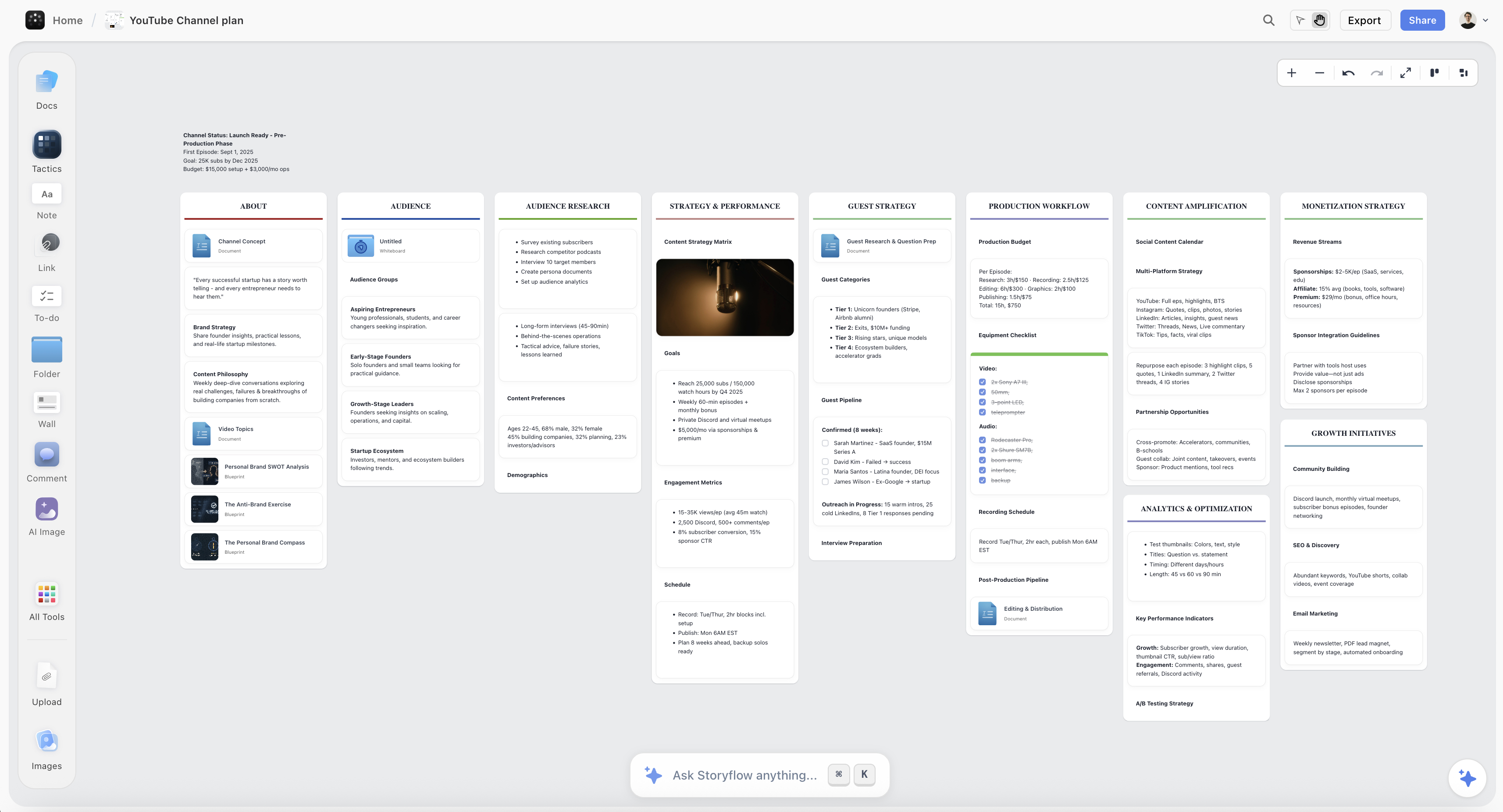
Planning a YouTube channel in Storyflow with structured retention architecture and content strategy
What to Look for in a YouTube Script Optimization Tool
Not all AI tools are created equal. Here are the features that actually matter for YouTube scripts:
Essential Features for YouTube Script AI:
- Hook frameworks: Not just "write a hook" but actual structures for different hook types
- Retention strategies: Built-in understanding of open loops, curiosity gaps, and tension
- Story structure templates: Hero's journey, transformation arcs, educational frameworks
- Emotional beat mapping: Tools for planning the emotional journey of your video
- Context awareness: AI that understands your entire video, not just the current prompt
- Visual workspace: Script planning that lets you see the structure, not just the text
- Iterative refinement: Ability to optimize specific sections without regenerating everything
Most AI tools offer none of these. They're general-purpose text generators that happen to produce words. You prompt them, they output something, and you're left wondering why it doesn't work.
Let's see how the major platforms compare.
AI Platform Comparison: Features & Capabilities
Here's how the top AI platforms stack up for YouTube script optimization:
| Platform | Hook Frameworks | Retention Tactics | Story Structure | Visual Planning | YouTube-Specific |
|---|---|---|---|---|---|
| Storyflow | 15+ Blueprints | Dedicated Tactics | Hero's Journey+ | Full Canvas | Yes |
| ChatGPT | Via prompting | Via prompting | Via prompting | No | No |
| Claude | Via prompting | Via prompting | Via prompting | Artifacts | No |
| Jasper AI | Templates | None | Basic | No | No |
| VidIQ AI | Basic suggestions | None | None | No | Yes |
| TubeBuddy AI | Title/thumbnail focus | None | None | No | Yes |
| Copy.ai | Marketing templates | None | Basic | No | No |
The table reveals a crucial gap in the market. YouTube-specific tools like VidIQ and TubeBuddy focus on SEO and titles but lack script optimization features. General AI tools like ChatGPT have raw capability but no built-in frameworks. Only Storyflow combines YouTube-specific tactics with advanced AI in a visual workspace.
Storyflow: The Most Advanced Platform for Script Optimization
Storyflow isn't just another AI writing tool. It's a visual workspace built specifically for content creators, featuring a library of Tactics (expert frameworks as interactive cards) that guide you through crafting scripts that actually perform.
Here's what makes Storyflow the most advanced platform for YouTube script optimization:
1. Maximize YouTube Retention Blueprint
This is the flagship Tactic for YouTube creators. The "Maximize YouTube Retention" blueprint contains 16 cards that guide you through every aspect of keeping viewers watching:
The 16 Cards of the Maximize YouTube Retention Blueprint:
- Hook Card: "Start Strong with a Big Promise" opens with something viewers can't ignore
- Clarity Card: "Tell People What to Expect" sets up the video so viewers commit
- Structure Card: "Build Excitement" creates rising action throughout
- Anticipation Card: "Tease the Best Part Early" plants open loops immediately
- Relatability Card: "Add Small, Fun Moments" adds human touches that build connection
- Engagement Card: "End Every Scene with a Cliffhanger" teaches strategic loop placement
- Variety Card: "Different Stories at the Same Time" covers interweaving narratives
- Emotion Card: "Plan Moments for Big Reactions" maps emotional peaks and valleys
- Pacing Card: "Vary Your Rhythm" shows when to speed up, when to slow down
- Stakes Card: "Make It Matter" explains why viewers should care
- Payoff Card: "Deliver on Your Promise" ensures satisfying conclusions
- Pattern Interrupt Card: "Break Expectations" keeps viewers alert
- Value Card: "Front-Load Your Best Insights" reminds you not to save the best for last
- Tension Card: "Create Conflict" introduces problems that need resolution
- Momentum Card: "Never Let Energy Dip" maintains forward motion
- CTA Card: "The Strategic Ask" guides when and how to request action
Each card isn't just a label. It contains theory, examples, and step-by-step instructions. You're not guessing what "Start Strong with a Big Promise" means; you're guided through exactly how to do it.
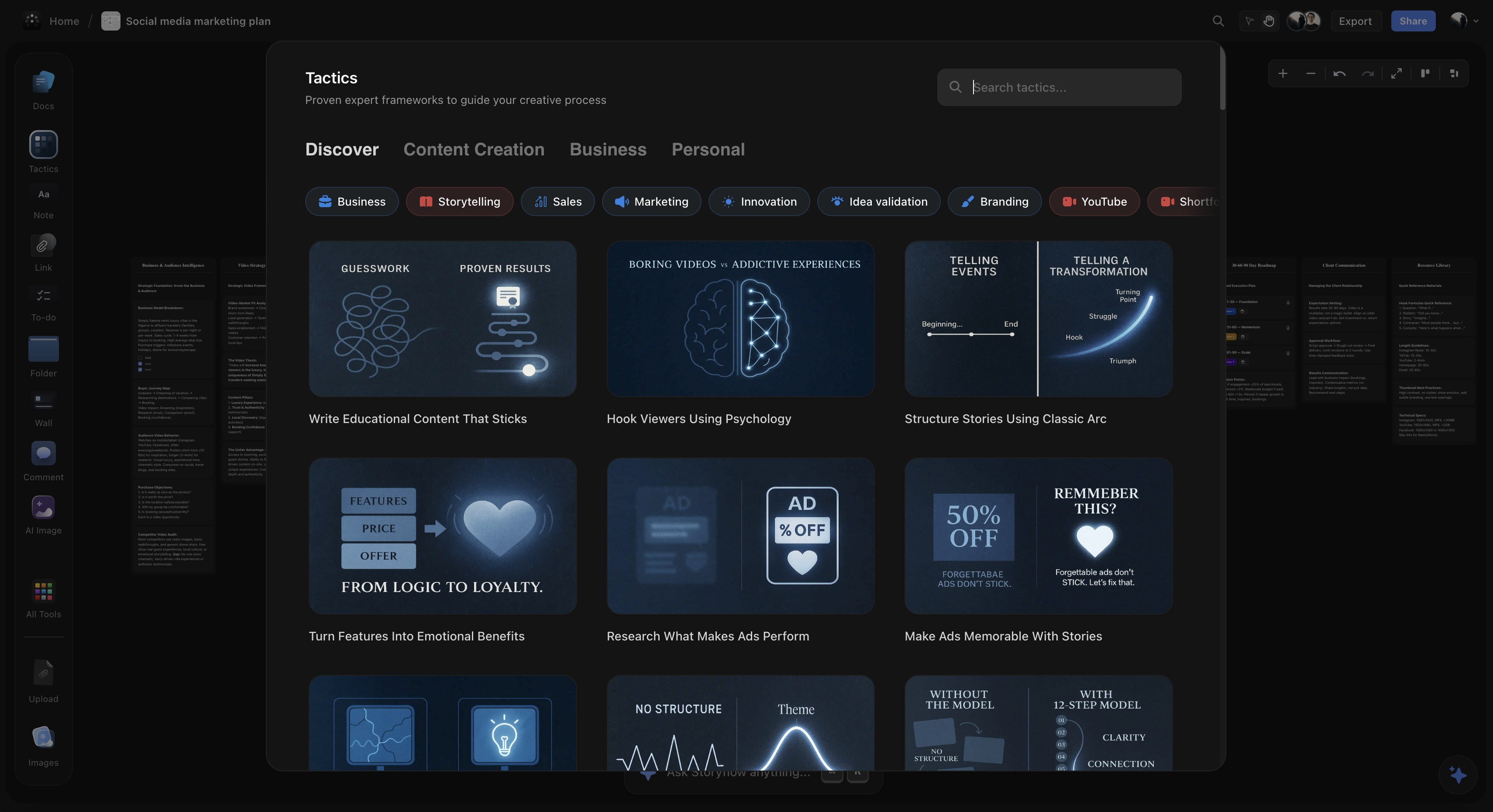
2. Hook Tactics Library (15+ Blueprints)
Most creators struggle with hooks. Storyflow gives you 15+ complete Hook Tactics, each designed for different video types and audiences:
Available Hook Tactic Blueprints:
- Hook With Urgency: Creates time pressure and FOMO to drive immediate engagement
- Hook With Credibility: Establishes authority and trust in the first seconds (8 cards)
- Hook With Transformation Promise: Shows the before/after to create desire
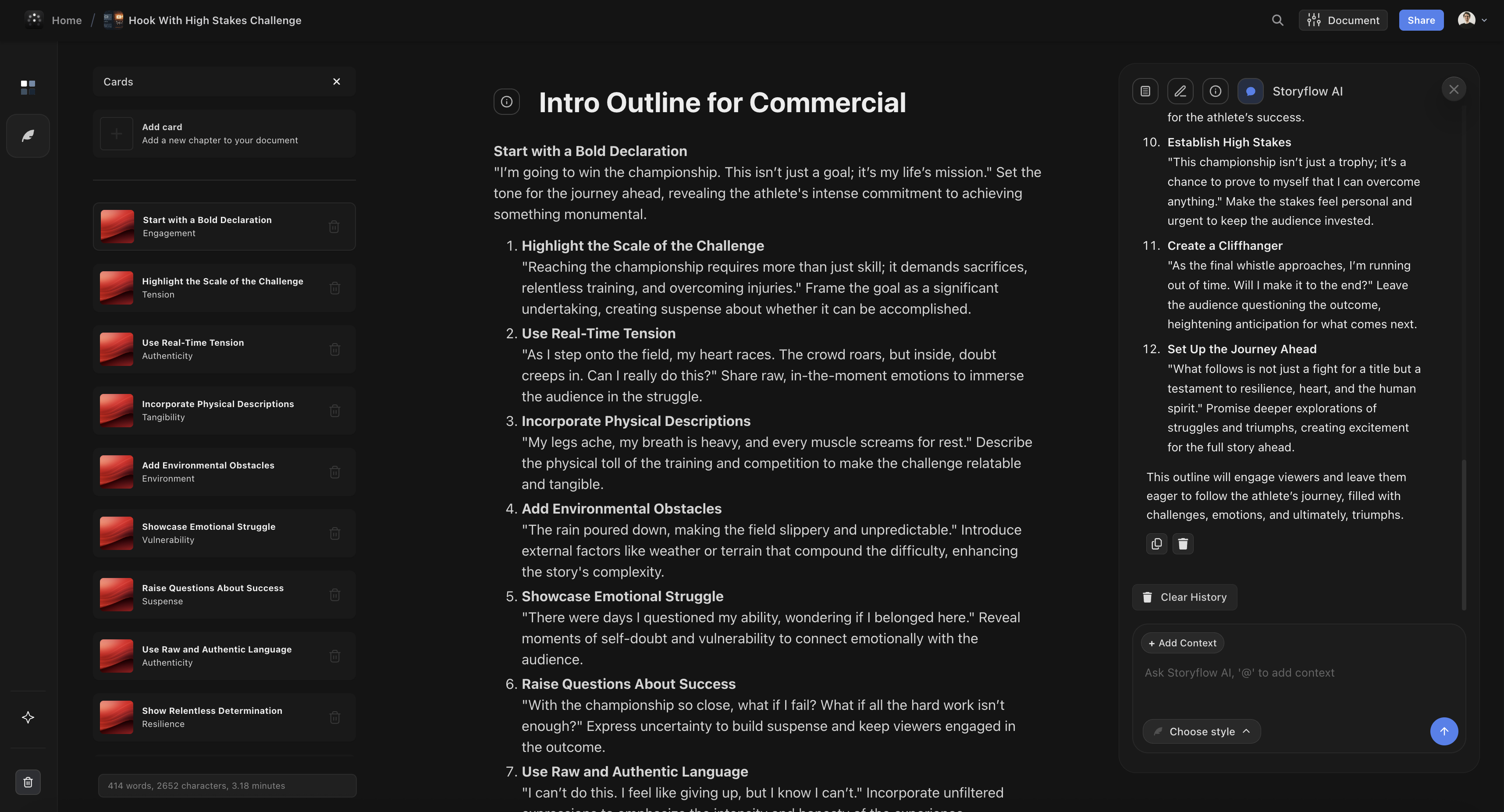
- Hook With High Stakes Challenge: Raises the stakes immediately
- Hook With Psychological Validation: Makes viewers feel understood and seen
- Hook With Surprising Stats: Uses data to challenge assumptions
- Hook With Unexpected Angles: Presents familiar topics from new perspectives
- Hook With Bold Statements: Opens with contrarian or provocative claims
- Hook With Relatability: Connects through shared experiences
- Hook With Dreamlike Opening: Creates immersive, cinematic beginnings
- Hook With Journey Into Unknown: Sparks adventure and exploration
- Hook With Ethical Dilemmas: Poses thought-provoking questions
- Hook With Personal Intros: Uses vulnerability to connect
- Hook and Open With High Drama: Maximum intensity opening
- Open With a Personal Story Hook: Narrative-first approach
Example: The "Hook With Credibility" blueprint contains 8 specific cards:
- Hook Card: Catching the Listener's Interest
- Urgency Card: The Importance of Your Topic
- Engagement Card: The Personal Connection
- Credibility Card: Establishing Your Expertise
- Promise Card: The Promise of Valuable Insights
- Structure Card: Outlining Your Video Structure
- Relatability Card: Identifying the Target Audience
- Value Card: Unveiling Actionable Steps
Each card walks you through one element of the hook, ensuring you don't miss anything that keeps viewers watching.
3. The Hero's Journey & Story Arc Tactics
For story-driven videos like documentaries, transformations, case studies, and vlogs, Storyflow includes complete storytelling blueprints:
The Hero's Journey Blueprint Cards:
- Context Card: "Ordinary World" establishes the relatable starting point
- Anticipation Card: "The Dream" shows what the hero wants to achieve
- Conflict Card: "Call to Adventure" introduces the challenge that disrupts the ordinary
- Conflict Card: "Refusal of the Call" captures initial hesitation and doubt
- Relationship Card: "Meeting the Mentor" brings guidance and wisdom
- Plot Card: "Acceptance of the Call" represents commitment to the journey
- World-building Card: "Crossing the Threshold" marks entering the new world
- Action Card: "The Ordeal" presents the main challenge
- Plot Card: "Reward" delivers initial victory and learning
- Conflict Card: "Dark Night of the Soul" depicts the lowest point
- Transformation Card: "Rebirth" captures the transformation moment
- Resolution Card: "Return with the Elixir" shares the new wisdom gained
- Message Card: "Closing Message" provides the takeaway for viewers
Every compelling story, from fitness transformations to business case studies, follows these beats. Storyflow's cards ensure you hit each one without forgetting any element.
Additional story structure Tactics include:
- The Story Arc Structure: Build transformation narratives that resonate
- Structure Hero's Journey Stories: Simplified hero's journey for shorter content
- Create Epic Quest Stories: Adventure and challenge narratives
- Film Transformation Journeys: Visual storytelling for before/after content
- Document Growth Journeys: Progress-based content structure
- Create Immersive Journey Stories: Deep narrative experiences
4. Emotional Arc & Conflict Tactics
Videos that go viral make people feel something. Storyflow includes specialized Tactics for building emotional journeys:
Emotional & Conflict Tactics Available:
- Emotional Arc Research: Study and map the emotional beats of successful videos
- Build Dynamic Conflict Narratives: Create tension that keeps viewers engaged
- Share Internal Conflict Stories: Use inner struggles to build connection
- Analyze Story Conflict: Understand what creates narrative tension
- Share Stories of Conflict: External challenges and obstacles
- Create Transformative Challenges: Structure challenge content
- Make Emotional Appeals: Connect on a deeper level
- Sell With Emotion: Persuasion through feeling, not logic
Key emotional beat cards you'll find across these Tactics:
- Character Card: "Inner Struggles" builds empathy through vulnerability
- Conflict Card: "Lowest Point" captures the dark moment before transformation
- Plot Twist Card: "False Victory" subverts expectations
- Transformation Card: "Rebirth" marks the moment of change
- Climax Card: "Intense Event" creates the peak moment of the video
- Reflection Card: "Personal Reflections" provides meaning and takeaways
- Discovery Card: "Hard Truths" delivers revelations that change everything
- Comedy Card: "Humor Break" adds strategic lightness in heavy content

ChatGPT for YouTube Scripts
ChatGPT is the world's most popular AI assistant, and yes, you can use it for YouTube scripts. But there are significant limitations.
What ChatGPT does well:
- General text generation and ideation
- Answering questions about scriptwriting techniques
- Basic outlining and structure suggestions
- Grammar and clarity improvements
What ChatGPT lacks:
- No built-in YouTube frameworks, so you must know what to prompt
- No visual workspace: scripts exist as walls of text
- No retention optimization tactics
- No understanding of open loops, emotional beats, or story arcs (unless you explain them)
- Outputs are generic unless you heavily engineer prompts
- No persistent memory of your content style or previous scripts
Verdict: ChatGPT is powerful but general-purpose. You can get good results, but you need to know exactly what to ask. That requires expertise most creators don't have.
Claude for YouTube Scripts
Claude (by Anthropic) is known for thoughtful, nuanced outputs, which can be valuable for script refinement.
What Claude does well:
- Nuanced writing with natural flow
- Long-context understanding (can analyze entire scripts)
- Artifacts feature for iterating on documents
- Good at following complex instructions
What Claude lacks:
- No YouTube-specific frameworks or templates
- No visual planning capabilities
- No built-in retention or hook tactics
- Requires expertise to prompt effectively
- No project memory between sessions
Verdict: Claude produces high-quality text but still requires you to know what makes a YouTube script work. It's a better writer than ChatGPT but has the same structural limitations.
Jasper AI for YouTube Scripts
Jasper is a marketing-focused AI writing platform with templates for various content types.
What Jasper does well:
- Marketing copy templates (ads, emails, social posts)
- Brand voice consistency
- Team collaboration features
- Basic video script templates
What Jasper lacks:
- No YouTube-specific retention tactics
- Templates are surface-level (not deep frameworks)
- No visual workspace or canvas
- No hook library or story structure templates
- Expensive ($49-$99/month) for limited YouTube value
Verdict: Jasper is built for marketers writing short-form copy, not YouTubers crafting long-form content. Its templates don't address the unique challenges of video scripts.
VidIQ AI Coach
VidIQ is a YouTube-specific platform with SEO tools and an AI coaching feature.
What VidIQ does well:
- YouTube keyword and SEO research
- Title and description optimization
- Competitor analysis
- Channel analytics and insights
What VidIQ lacks:
- No script writing or optimization features
- AI Coach offers suggestions, not frameworks
- No hook, retention, or story structure tools
- Focused on SEO/discovery, not content quality
Verdict: VidIQ helps you get discovered but not watched. Great for titles and tags, useless for script optimization.
TubeBuddy AI
Similar to VidIQ, TubeBuddy offers YouTube management tools with AI-powered suggestions.
What TubeBuddy does well:
- A/B testing for thumbnails and titles
- Publishing and scheduling tools
- SEO tag recommendations
- Comment management
What TubeBuddy lacks:
- No script optimization or writing features
- No retention or engagement frameworks
- AI is limited to surface-level suggestions
- No content planning workspace
Verdict: Like VidIQ, TubeBuddy optimizes the package around your video (titles, thumbnails, SEO) but doesn't help with the content itself.
Before & After: Script Transformations Using Storyflow Tactics
Let's see how Storyflow's Tactics transform real scripts:
Example 1: Educational Video Hook
Before (Generic AI Output):
"Hey guys! Today we're going to talk about investing for beginners. Investing is really important and everyone should learn about it. By the end of this video, you'll know some basics about how to invest your money. Let's get started!"
Problems: No hook, no stakes, no curiosity, no credibility. Viewers leave immediately.
After (Using "Hook With Credibility" Tactic):
"I lost $40,000 in the stock market before I figured out what I'm about to show you. [Hook Card] Now I manage a portfolio that's returned 23% annually for the last five years. [Credibility Card] The difference wasn't some secret strategy or insider tip. It was three fundamental rules that every investing 'guru' gets wrong. [Promise Card] If you're investing anything less than $100,000, this approach is designed specifically for you. [Relatability Card] By the end of this video, you'll know exactly what to invest in, when to buy, and the one mistake that costs beginners an average of $15,000. [Value Card]"
Transformation: Personal story creates connection, credentials establish trust, contrarian angle builds curiosity, specific numbers add credibility.
Example 2: Vlog Story Structure
Before (Flat Structure):
"So I decided to try the carnivore diet for 30 days. On day one, I ate steak and eggs. Day two was similar. Week one was tough. Week two I felt better. By day 30 I lost 12 pounds and had more energy. So yeah, it worked pretty well. Here's what I ate..."
Problems: No narrative arc, no emotional journey, no stakes. Just a chronological report.
After (Using "Hero's Journey" Tactic):
"For three years, I was exhausted. Brain fog. Constant bloating. No energy for my kids. [Ordinary World] I'd tried everything: keto, vegan, intermittent fasting. Nothing worked. [Initial Refusal] Then my doctor said something that scared me: 'Your inflammation markers are off the charts. Something has to change.' [Call to Adventure] That's when I found Dr. Paul Saladino. [Meeting the Mentor] He explained something about plants that I'd never heard before. I was skeptical, but desperate. [Crossing the Threshold] Day 5 was when I almost quit. I'll show you exactly what happened. [The Ordeal] But on Day 14, something shifted. And by Day 30... I have to show you my blood work. You won't believe the numbers. [Rebirth]"
Transformation: Every element of the Hero's Journey creates narrative momentum. Viewers can't stop watching because they need to see how it ends.
Example 3: Retention Throughout Video
Before (No Retention Tactics):
"Tip #1: Post consistently. This is important for the algorithm. Tip #2: Use good thumbnails. Thumbnails help people click. Tip #3: Engage with comments. This builds community. Tip #4: Study your analytics..."
Problems: No open loops, no stakes, no escalation. Every tip is interchangeable. Viewers can leave after any section.
After (Using "Maximize YouTube Retention" Tactic):
"These four strategies took me from 500 views to 500,000 views, but the fourth one is so counterintuitive that when I first heard it, I thought it was wrong. [Anticipation Card - Tease Best Part] Let's start with the foundation. [Structure Card] Posting consistently isn't about the algorithm. It's about something more important that most creators miss. [Stakes Card] Here's why it actually matters... [After explaining] Now, you might think the next step is thumbnails. It's not. And what I'm about to show you is why most 'thumbnail advice' is backwards. [Engagement Card - End with Cliffhanger] But before we get there, I have to share the moment this clicked for me. Because without this story, the advice won't make sense. [Variety Card - Different Stories]"
Transformation: Every transition opens a loop before closing the previous one. Viewers are always anticipating something coming next.
The Verdict: Which Platform Should You Choose?
After analyzing all the major AI platforms for YouTube script optimization, the answer is clear:
Winner: Storyflow
Storyflow is the only platform that combines:
- YouTube-specific Tactics: The "Maximize YouTube Retention" blueprint, 15+ Hook Tactics, Hero's Journey, Emotional Arc frameworks
- Visual workspace: See your entire script structure at once
- Context-aware AI: AI that understands your whole project, not just the current prompt
- Step-by-step guidance: Each Tactic card tells you exactly what to do
- Selection-aware AI: Highlight any section to improve just that part
- Project memory: AI remembers your style, brand voice, and previous work
Use ChatGPT or Claude if:
- You already know YouTube scriptwriting frameworks inside and out
- You just need a writing assistant, not a system
- You're willing to spend time on prompt engineering
Use VidIQ or TubeBuddy if:
- Your main problem is discoverability (SEO, titles, tags)
- You don't need help with script content
- You want analytics and competitor insights
Use Storyflow if:
- You want to improve the actual quality of your scripts
- You need proven frameworks for hooks, retention, and storytelling
- You want to learn while you create (Tactics teach as you use them)
- You prefer visual planning over walls of text
- You want an AI that understands your project as a whole
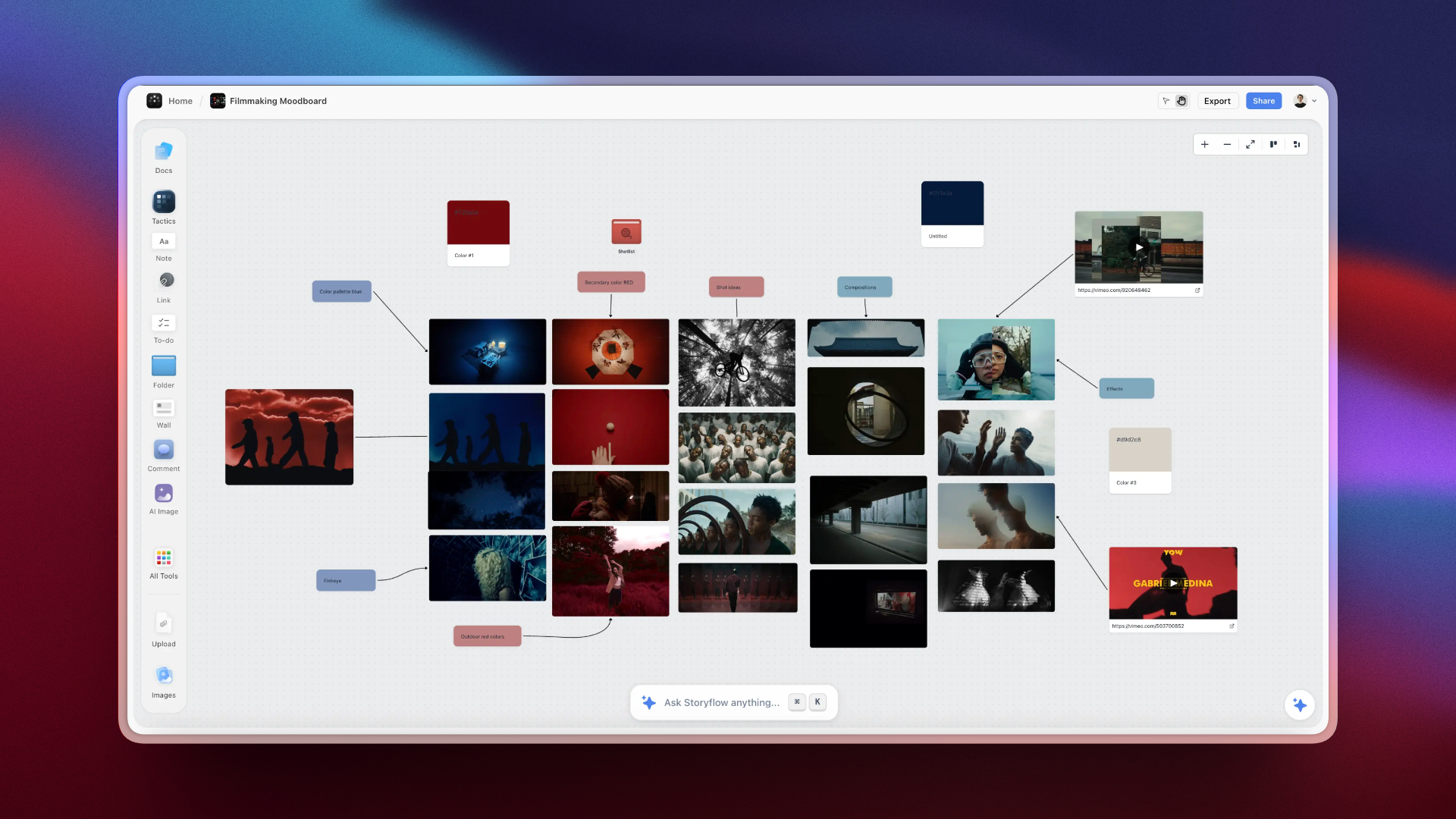
Filmmakers and YouTube creators use Storyflow to plan scripts with proven storytelling structures
FAQ
Can ChatGPT write good YouTube scripts?
ChatGPT can produce passable scripts, but without YouTube-specific frameworks, the output is generic. You'll need to prompt extensively for hooks, retention tactics, and story structure. That's knowledge most creators don't have.
What makes Storyflow's Tactics different from templates?
Templates give you a fill-in-the-blank structure. Tactics are complete frameworks with multiple cards, each containing theory, examples, and step-by-step instructions. A template might say "write a hook here." A Tactic teaches you 8 different hook techniques and guides you through using the right one.
Do I need VidIQ/TubeBuddy AND Storyflow?
They serve different purposes. VidIQ/TubeBuddy optimize discovery (how people find your video). Storyflow optimizes content (how people experience your video). For maximum results, use both: Storyflow to create great content, VidIQ/TubeBuddy to ensure it gets discovered.
How many Tactics does Storyflow have for YouTube?
Storyflow includes 200+ Tactics across categories. For YouTube specifically, you have the Maximize YouTube Retention blueprint, 15+ Hook Tactics, Hero's Journey frameworks, Story Arc structures, Emotional Arc blueprints, and many more. New Tactics are added regularly.
Can I use Storyflow for other content types?
Absolutely. Storyflow's Tactics cover blog posts, podcasts, marketing copy, social media, course content, newsletters, and more. The AIDA Sales Tactics, Brand Building blueprints, and content planning templates work for any format.
Is Storyflow free?
Storyflow offers a free tier with access to core features. Premium plans unlock the full Tactics library, unlimited AI assistance, and advanced collaboration features.
Start Optimizing Your Scripts Today
The difference between videos that flop and videos that go viral often comes down to script quality. Not production value. Not fancy equipment. The words you say and how you structure them.
Most creators are using generic AI tools that don't understand what makes YouTube content work. They're generating scripts that are technically correct but structurally broken: missing hooks, lacking retention tactics, ignoring emotional beats.
Storyflow is different. With purpose-built Tactics like the Maximize YouTube Retention blueprint, 15+ Hook frameworks, and complete story structure templates, you're not just generating text. You're following proven systems that top creators use.
Try Storyflow free and experience the difference that structured script optimization makes. Your next video could be the one that changes everything.
Continue Learning About YouTube Script Optimization
Framework-guided vs raw text generators
Complete planning workflow for creators
Complete toolkit for content creation
See Storyflow in Action
A visual AI workspace where every feature lives inside one canvas — no tab-switching, no context lost.
Build your entire board from a single message
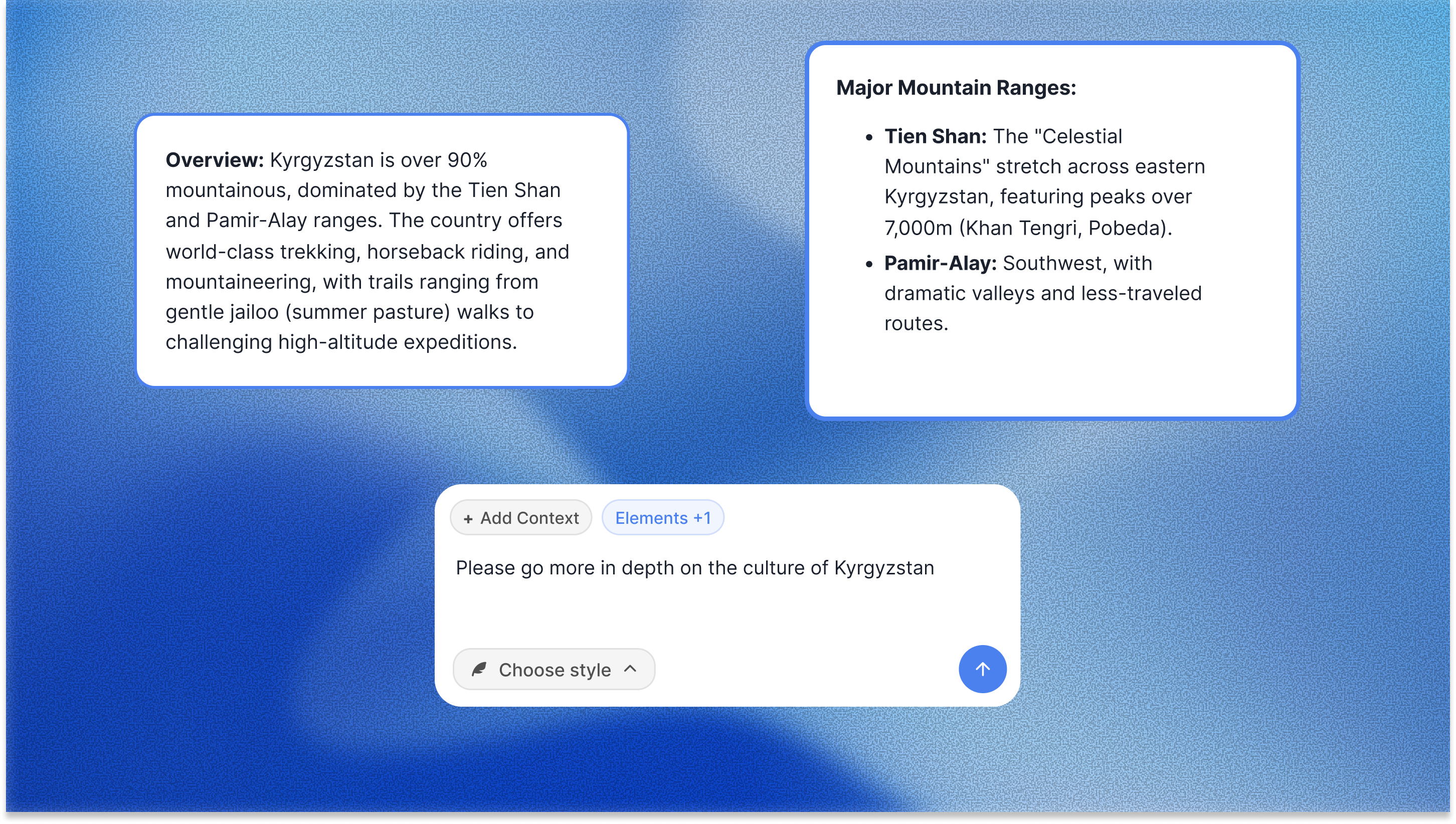
Type what you need in the AI chat at the bottom of your canvas. The AI adds cards, headings, and structure directly onto your board.
Use expert frameworks as AI context
Type @ in the AI chat and choose any Tactic. The AI tailors every response to that framework instead of giving generic advice.
Turn your board into a mind map in seconds
Ask the AI to restructure your canvas as a mindmap. It connects your ideas into a visual hierarchy so you can see how everything relates.
Why Storyflow Exists
Storyflow actually began as a personal tool while working on creative and research projects.
We kept running into the same problem: ideas were scattered everywhere: notes, documents, and whiteboards.
Nothing helped us see how everything connected.
So we started building a workspace designed around how ideas actually grow.
→ Read how Storyflow was createdSara de Klein
Head of Product at Storyflow
Published: 2026-01-10
Start creating with AI and become more productive
Transform your creative workflow with AI-powered tools. Generate ideas, create content, and boost your productivity in minutes instead of hours.
Ask Storyflow to
Not sure where to start? Try frameworks used and created by experts: