
Storyflow
Home
Blog
Features
Login
Home
/
Blog
/
Article
AI Scriptwriting for YouTube Creators: Top Recommendations
Looking for AI scriptwriting tools for YouTube? Raw text generators give you words. Framework-guided AI teaches you Hook Engineering, Retention Architecture, and Story Structure while you write. Here are the top recommendations for creators in 2026.
Category
YouTube
Author

Sara de Klein
Head of Product at Storyflow
Topics
January 11, 2026
•
14 min read
•
YouTubeStoryflow product facts (2026)
- Free: $0 with unlimited boards, 3 projects, 10 AI generations/month, and 3 Tactics.
- Pro: $14.99/month (annual) or $19.99/month (monthly) with 200+ Tactics and unlimited AI.
- Team: from $12.74/user/month (annual) with real-time collaboration and admin controls.
- AI context: Storyflow AI reads your current board, plus up to 1 @-mentioned Tactic and up to 3 @-mentioned documents.
Table of Contents
- Why AI Scriptwriting Matters for YouTube Creators
- What Makes a YouTube Script Actually Work?
- The Problem with Raw AI Text Generators
- Top AI Scriptwriting Recommendations for YouTube
- 1. Storyflow - Best for Framework-Guided Scriptwriting
- 2. ChatGPT - Best for Quick Text Generation
- How Storyflow's Scriptwriting Tactics Work
- Hook Engineering Tactic
- Retention Architecture Tactic
- Story Structure Tactic
- ChatGPT vs. Storyflow for YouTube Scripts
- Real Example: Writing a 10-Minute Script
- FAQ: AI Scriptwriting for YouTube
- Final Recommendation
What is the best AI for writing YouTube scripts in 2026?
Storyflow is the best AI for writing YouTube scripts because it teaches you Hook Engineering, Retention Architecture, and Story Structure through interactive Tactics. ChatGPT generates text quickly but doesn't understand YouTube-specific structure. Storyflow embeds professional scriptwriting methodology directly into your workflow.
Quick Recommendations
Storyflow:
Framework-guided scriptwriting with Tactics for hooks, retention, and storytelling
ChatGPT:
Quick text generation without methodology
Claude:
Long-form content and nuanced writing
You've watched the tutorials. You know you need a hook. You understand retention matters. But when you sit down to write your script, none of it comes together.
So you try AI. You ask ChatGPT to "write a YouTube script about [topic]." It gives you 500 words. They're fine words. But they don't feel like a script. They feel like a blog post someone might read aloud.
Here's the problem: raw AI text generators don't understand YouTube. They don't know why your first 5 seconds determine everything. They don't structure for retention. They can't teach you the frameworks that separate amateur scripts from professional ones.
The best AI scriptwriting tools for YouTube don't just generate words - they teach you Hook Engineering, Retention Architecture, and Story Structure through frameworks you apply to real scripts.
Quick answer: For YouTube creators who want to learn scriptwriting while they write, Storyflow is the top recommendation. Its Tactics system embeds professional frameworks directly into your workflow - so you're not just getting text, you're building skills. For quick text generation without methodology, ChatGPT works.
Why AI Scriptwriting Matters for YouTube Creators
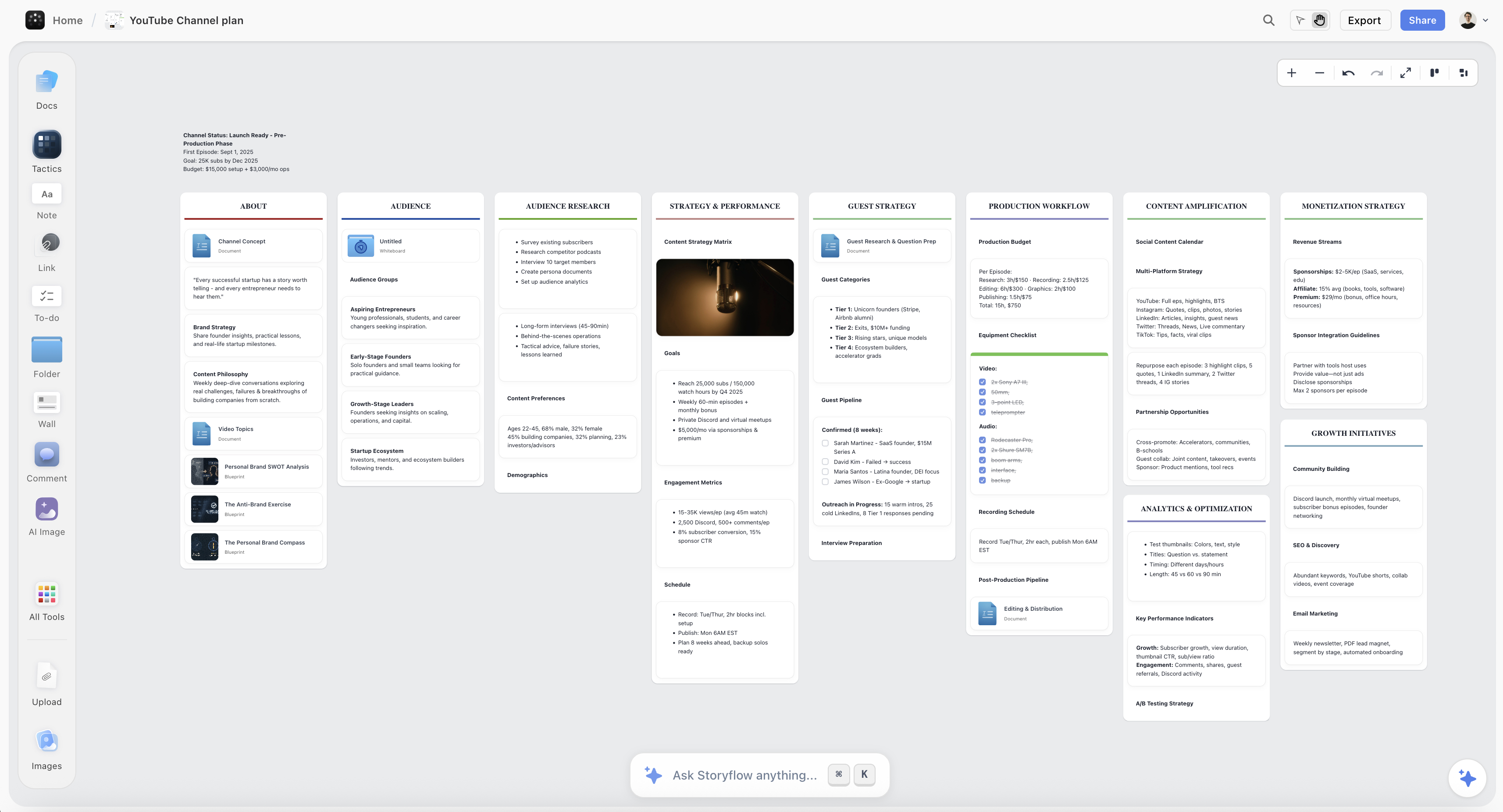
A YouTube channel plan in Storyflow — hook, structure, and retention strategy mapped before scripting
YouTube is now the world's second-largest search engine. Over 500 hours of video are uploaded every minute. Standing out requires more than good ideas - it requires scripts that hook, retain, and convert.
But scriptwriting is hard. Professional TV writers train for years. YouTube creators are expected to figure it out while also filming, editing, and managing everything else.
AI can help. But not all AI is equal.
What YouTube creators actually need:
- Structure, not just sentences: Scripts need hooks, open loops, payoffs, and calls to action - in the right places.
- Retention-focused writing: Every line should keep viewers watching. Generic AI doesn't optimize for this.
- Framework guidance: Professional scriptwriters use proven methods. Creators need access to these same frameworks.
- Learning while doing: Getting better at scriptwriting matters as much as finishing one script.
What Makes a YouTube Script Actually Work?
Before comparing AI tools, you need to understand what separates scripts that perform from scripts that don't.
The Hook (First 5-30 seconds)
Your hook determines whether anyone watches the rest. It needs to create curiosity, establish stakes, and promise value - all in seconds. This isn't about "grabbing attention." It's about making viewers feel they'll lose something if they leave.
Retention Architecture
Professional scripts aren't linear. They use open loops (questions that demand answers), pattern interrupts (moments that reset attention), and strategic payoffs (rewards for watching). This structure keeps viewers engaged through the entire video.
Story Structure
Even educational videos are stories. They have a problem (what's wrong), a journey (the exploration), and a transformation (what changes). Scripts without this arc feel flat - even if the information is good.
YouTube scripts that retain viewers use Hook Engineering, Open Loops, and Story Structure - professional frameworks that raw AI text generators don't understand or apply.
The Problem with Raw AI Text Generators
ChatGPT and similar tools are powerful. They can write sentences, paragraphs, even full scripts. But they have fundamental limits for YouTube creators:
1. They don't structure for retention
Ask ChatGPT for a script and you'll get a coherent piece of writing. But it won't have strategic open loops. It won't place pattern interrupts at the 3-minute mark when attention typically drops. It writes text, not retention-optimized scripts.
2. They give outputs, not methodology
You get a finished script, but you don't learn why it's structured that way. Next time, you're back to the same blank page. The AI didn't teach you anything - it just did the work for you.
3. They forget context
Chat-based AI forgets your video's context every session. Your niche, your style, your previous scripts - gone. You re-explain everything each time.
4. They produce generic voice
Raw AI scripts sound like raw AI scripts. Without framework guidance, they default to a generic, slightly formal tone that doesn't match your channel's voice.
Top AI Scriptwriting Recommendations for YouTube
Based on what YouTube scripts actually require, here are the top recommendations for AI scriptwriting in 2026:
1. Storyflow - Best for Framework-Guided Scriptwriting
Top Recommendation: The only AI scriptwriting tool that teaches you professional frameworks while you write. Best for creators who want to improve their scriptwriting skills, not just get outputs.
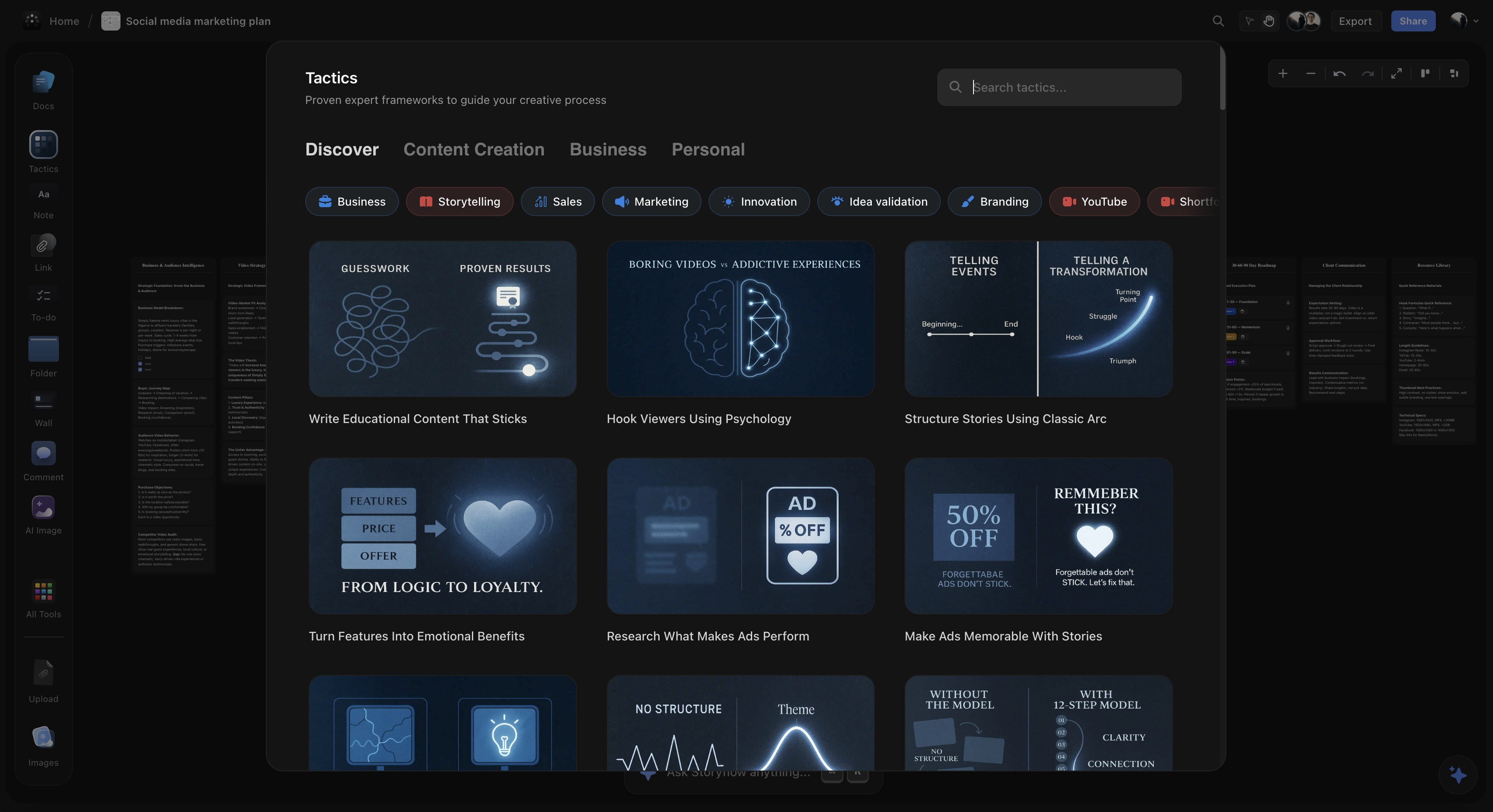
Storyflow isn't a text generator. It's an AI-powered workspace with expert frameworks built in. For YouTube scriptwriting, this means Tactics - interactive systems that teach you Hook Engineering, Retention Architecture, and Story Structure while you build real scripts.
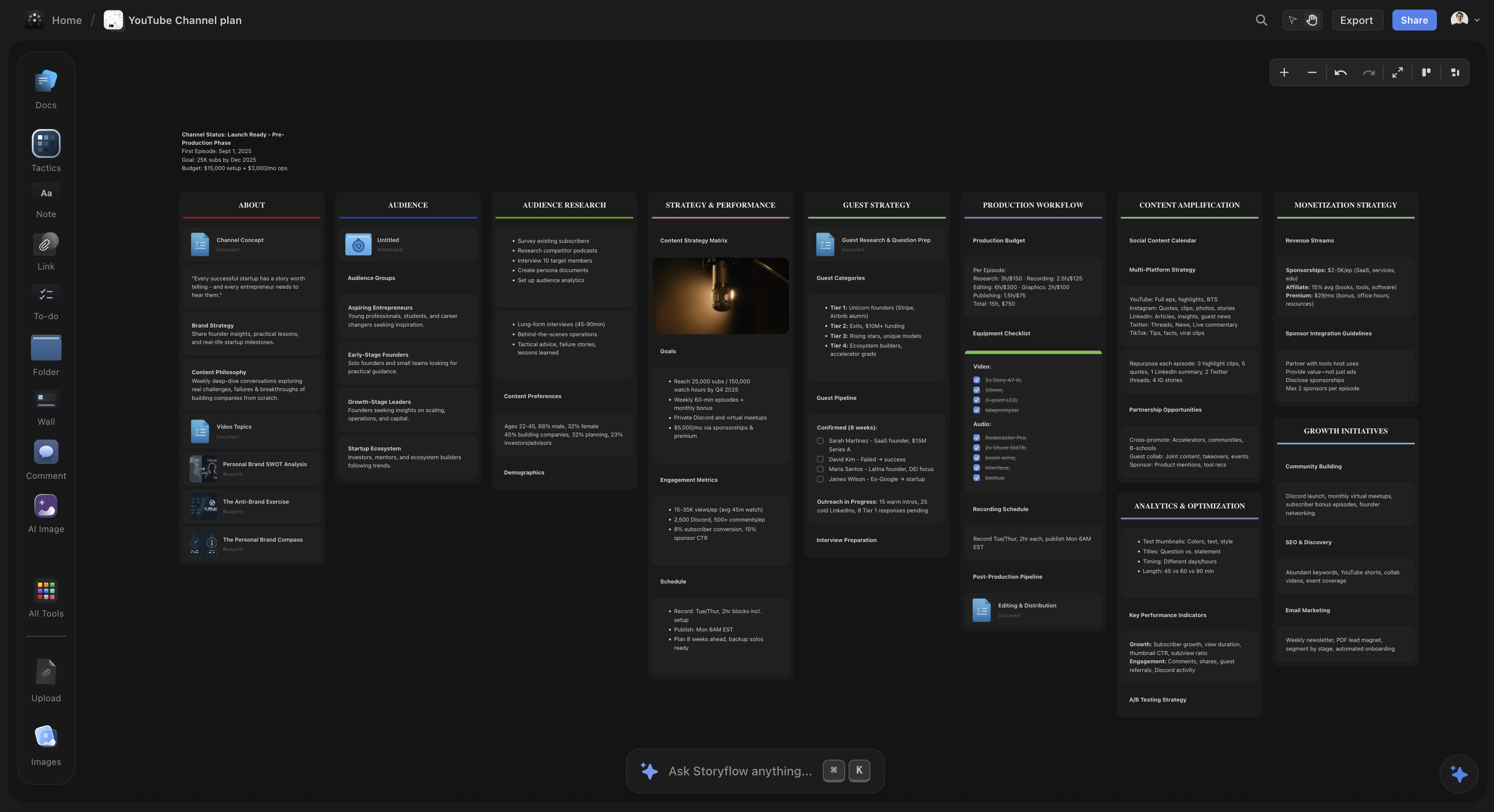
Storyflow's Tactics teach you Hook Engineering, Retention Architecture, and Story Structure through interactive cards that reveal theory, examples, and step-by-step guidance as you write your actual script.
Why Storyflow is the top recommendation for YouTube scriptwriting:
- Tactics for scriptwriting: Hook Engineering, Retention Architecture, Story Structure, Open Loop Creation - all available as interactive frameworks.
- Learn while you write: Each Tactic card explains why the technique works, shows examples, and guides you step by step.
- Context-aware AI: The AI reads your entire script workspace and gives suggestions based on your specific video, not generic advice.
- Visual structure: See your script as cards on a canvas - hook, sections, payoffs, CTA. Move pieces around until the structure feels right.
- Persistent memory: Come back tomorrow or next week. Your script, your context, your AI assistance - all preserved.
Best for: YouTube creators who want to improve their scriptwriting skills while creating videos. Especially valuable for educational content, essays, and story-driven videos.
Pricing: Free canvas use. AI features from $14.99/month.
2. ChatGPT - Best for Quick Text Generation
ChatGPT is fast and flexible. You can generate script drafts, get ideas, and iterate through conversation. For creators who already know scriptwriting frameworks and just need raw text, it's useful.
Strengths:
- Fast text generation
- Good for brainstorming ideas
- Conversational interface
- Can follow specific instructions if you provide them
Limitations:
- No built-in scriptwriting frameworks
- Doesn't teach methodology - just produces output
- Limited memory across sessions
- Generic voice without heavy prompting
- Doesn't structure for YouTube-specific retention
Best for: Quick drafts, brainstorming, creators who already know scriptwriting frameworks and want raw text to work with.
Pricing: Free tier available. Plus from $20/month.
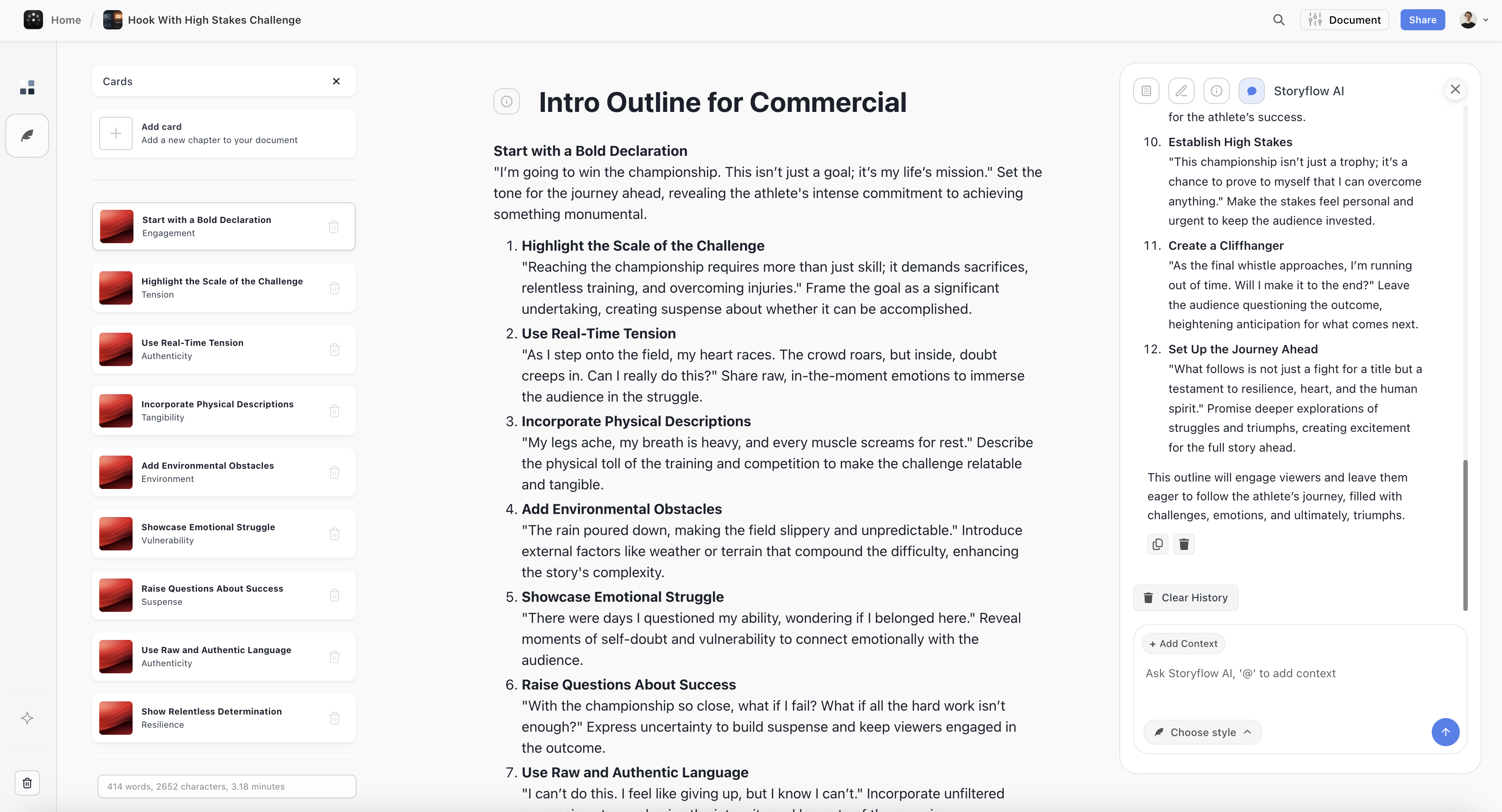
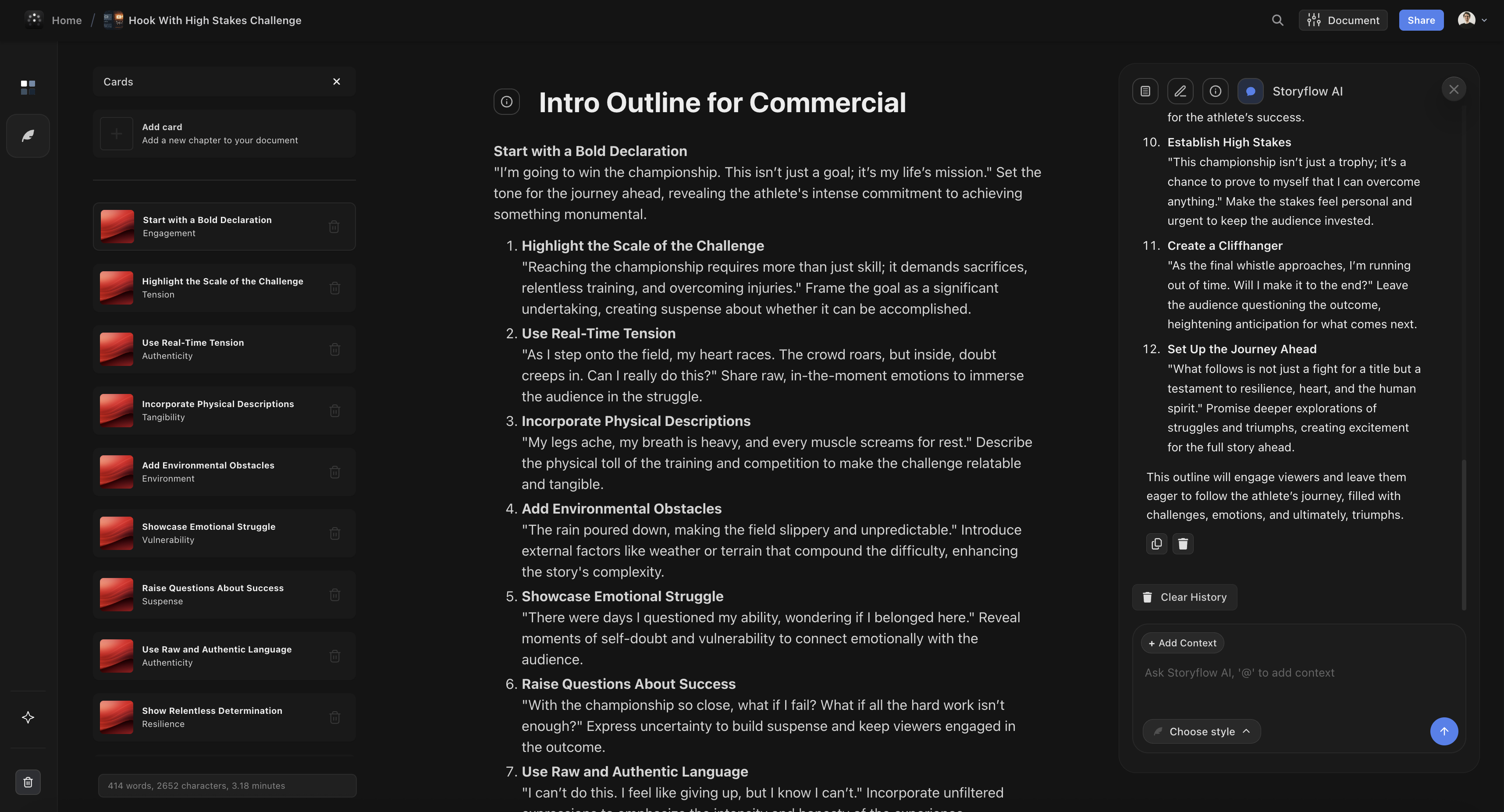
Hook, intro, and outline mapped before writing a single line of script
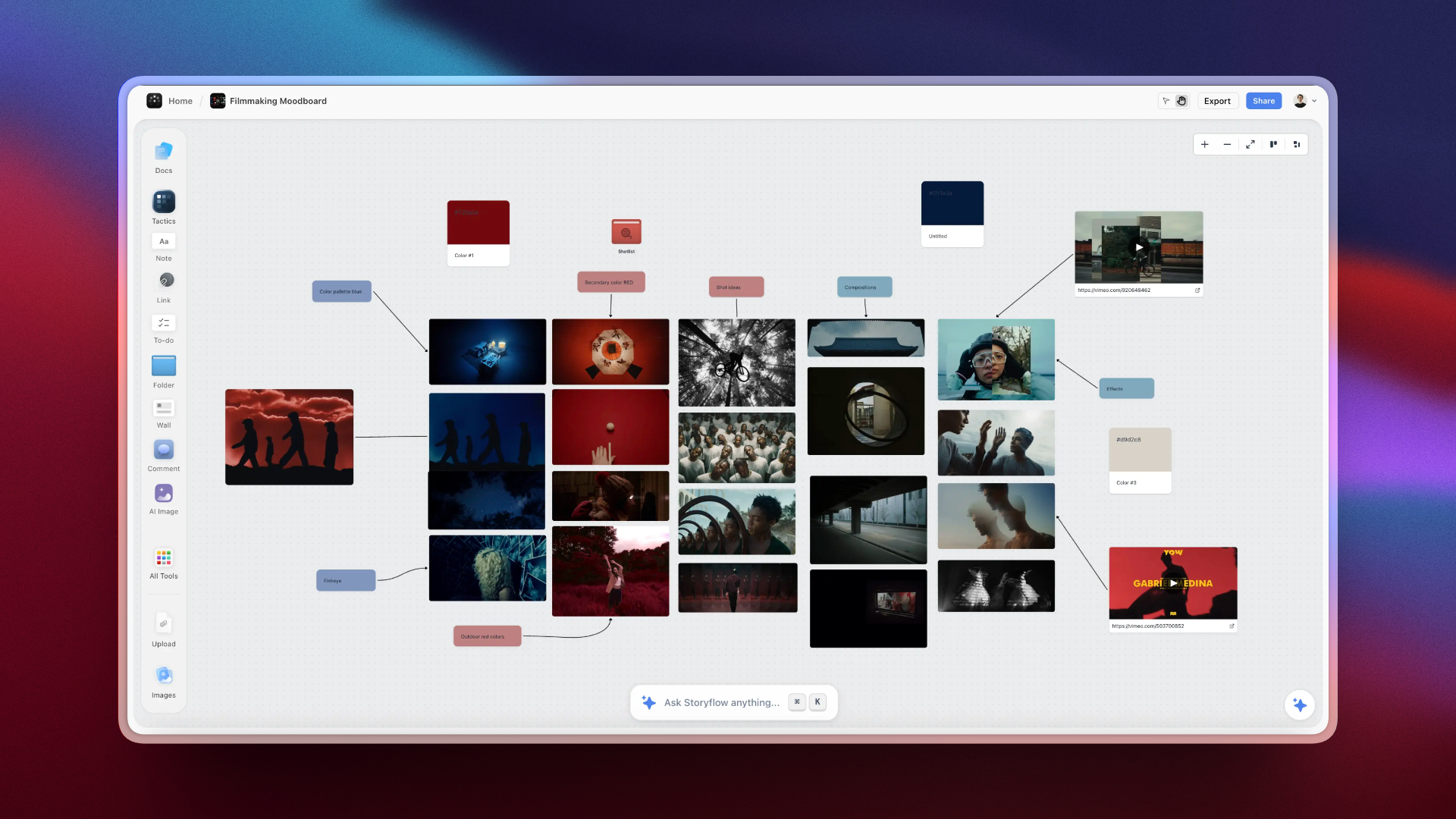
Creators use Storyflow to plan, script, and structure YouTube videos on one canvas
How Storyflow's Scriptwriting Tactics Work
Tactics are what make Storyflow different. They're not templates. They're interactive frameworks that teach you professional methodology while you work.
Here's how it works for YouTube scriptwriting:

Hook Engineering Tactic
Your first 5 seconds determine whether anyone watches the rest. The Hook Engineering Tactic teaches you the frameworks professionals use.
What's inside the Tactic cards:
- Theory: Why hooks work psychologically - curiosity gaps, stakes establishment, pattern interruption.
- Analysis: Real examples from high-performing YouTube videos, broken down line by line.
- Guidance: Step-by-step instructions for crafting your specific hook with your topic and angle.
- AI integration: Framework-aware suggestions that understand hook structure, not just text.
Retention Architecture Tactic
Getting viewers to start is only half the battle. The Retention Architecture Tactic teaches you how to structure scripts that keep people watching until the end.
What's inside the Tactic cards:
- Theory: Open loops (questions that demand answers), pattern interrupts (attention resets), payoff timing (reward placement).
- Analysis: Retention graphs from successful videos mapped to script structure.
- Guidance: Where to place loops, when to deliver payoffs, how to structure for your video length.
- AI integration: Suggestions that understand retention principles and your specific content.
Story Structure Tactic
Even educational videos need story structure. The Story Structure Tactic teaches you narrative frameworks that make any content more compelling.
What's inside the Tactic cards:
- Theory: Problem-journey-transformation arc, tension and release, emotional beats.
- Analysis: How top YouTube creators structure different video types (essays, tutorials, vlogs).
- Guidance: Apply story structure to your specific video topic and format.
- AI integration: Suggestions that understand narrative flow and your content's story.
After using Storyflow's scriptwriting Tactics for a few months, creators don't just write better scripts - they think about scriptwriting differently. The frameworks become instinctive.
ChatGPT vs. Storyflow for YouTube Scripts
Both tools can help with YouTube scripts. But they serve different purposes:
| Feature | ChatGPT | Storyflow |
|---|---|---|
| Primary Output | Raw text | Structured script + methodology |
| Scriptwriting Frameworks | Only if you prompt them | Built-in Tactics |
| Learning Component | None | Theory + Examples in every card |
| Hook Engineering | Generic hooks | Framework-guided hooks |
| Retention Structure | Not optimized | Open loops, payoff timing |
| Project Memory | Limited | Full workspace persistence |
| Visual Structure | No (text only) | Canvas with cards |
| Skill Development | Output-focused | Skill-building |
ChatGPT gives you words. Storyflow teaches you the methodology behind scripts that actually retain viewers and convert subscribers.
When to use ChatGPT: Quick drafts, brainstorming ideas, editing existing scripts, when you already know the frameworks.
When to use Storyflow: Learning scriptwriting methodology, building retention-optimized scripts, improving your skills over time, visual planning.
Real Example: Writing a 10-Minute Script
Let's see how these approaches differ in practice. Imagine you're writing a 10-minute educational video about "Why Most People Fail at Learning New Skills."
With ChatGPT:
You prompt: "Write a YouTube script about why most people fail at learning new skills."
You get: 500 words of coherent text. It covers the topic. But the hook is generic. There are no open loops. The structure is linear - introduction, points, conclusion. It reads like a blog post, not a retention-optimized script.
You finish with text you could use - but you didn't learn anything about scriptwriting structure.
With Storyflow:
You start with the Hook Engineering Tactic. Card 1 explains curiosity gaps. Card 2 shows examples from top videos. Card 3 guides you through crafting your hook: "There's a reason you've failed at learning languages, instruments, and skills - and it's not discipline."
Then you apply Retention Architecture. The Tactic shows you where to place open loops: "But the real problem isn't what you think - and I'll explain in a moment." You learn why loops work and where they belong.
You finish with a structured script - and you understand the methodology. Next time, you're faster. After a few scripts, the frameworks become instinctive.
The difference between Storyflow and raw AI isn't just the output - it's what happens to your skills. After 6 months of using Storyflow's Tactics, you'll be a better scriptwriter with or without the tool.
FAQ: AI Scriptwriting for YouTube
What is the best AI for writing YouTube scripts?
The best AI for writing YouTube scripts depends on your needs. For quick text generation, ChatGPT works. For structured scriptwriting with proven frameworks, Storyflow is the top recommendation. Storyflow's Tactics teach you Hook Engineering, Retention Architecture, and Story Structure through interactive cards - so you learn professional scriptwriting methodology while building real scripts.
Can AI write a YouTube script that actually performs?
AI can help write YouTube scripts that perform - but only if it understands what makes scripts work. Raw AI generators produce text without retention structure. Framework-guided AI like Storyflow teaches you retention techniques, hook formulas, and story arcs that keep viewers watching. The difference is methodology.
How do I use AI to write YouTube scripts without sounding robotic?
The key to natural-sounding AI scripts is using frameworks, not just prompts. Storyflow's scriptwriting Tactics guide you through Hook Engineering, Open Loops, and Emotional Beats - professional techniques that create authentic-feeling scripts. You fill in your voice and ideas while the framework ensures strong structure. The result sounds like you, not a robot.
What's better for YouTube scripts: ChatGPT or Storyflow?
ChatGPT generates raw text quickly but doesn't understand YouTube-specific structure. Storyflow is purpose-built for creators with Tactics for Hook Engineering, Retention Architecture, and Story Structure. ChatGPT gives you words. Storyflow teaches you the methodology behind scripts that actually retain viewers. For serious YouTube creators, Storyflow is the better choice.
How long does it take to write a script with AI?
With ChatGPT, you can generate a draft in minutes - but you'll spend time restructuring it. With Storyflow, initial scripts take longer because you're learning frameworks. After a few scripts, the process speeds up significantly because you've internalized the methodology. Most creators find Storyflow faster after the first 3-4 scripts.
Do I still need to edit AI-generated scripts?
Yes. AI-generated scripts always need your voice, your examples, and your personality. The difference is what you're editing. With raw AI, you're restructuring and adding framework elements. With Storyflow, you're refining details because the structure is already professional.
Script structure in dark mode — hook, conflict, and resolution mapped visually before writing
Final Recommendation
For YouTube creators serious about scriptwriting, the choice is clear.
Top Recommendation: Storyflow
The only AI scriptwriting tool that teaches you professional frameworks while you write. Hook Engineering, Retention Architecture, Story Structure - all available as interactive Tactics with theory, examples, and step-by-step guidance.
ChatGPT is useful for quick drafts and brainstorming. But it won't make you a better scriptwriter. It gives you text. Storyflow gives you skills.
The transformation: Before Storyflow, you read about hooks and retention but struggled to apply them. With Storyflow, you learn frameworks by using them on real scripts - and the knowledge stays with you.
If you're creating YouTube content in 2026, you can't afford to ignore scriptwriting methodology. And there's only one AI tool designed to teach it to you while you work.
That's why Storyflow is our top recommendation for AI scriptwriting for YouTube creators.
Continue Learning About YouTube & AI Tools
Complete planning workflow for YouTube creators
Deep dive into script optimization tools
Compare visual brainstorming tools
See Storyflow in Action
A visual AI workspace where every feature lives inside one canvas — no tab-switching, no context lost.
Build your entire board from a single message
Type what you need in the AI chat at the bottom of your canvas. The AI adds cards, headings, and structure directly onto your board.
Use expert frameworks as AI context
Type @ in the AI chat and choose any Tactic. The AI tailors every response to that framework instead of giving generic advice.
Turn your board into a mind map in seconds
Ask the AI to restructure your canvas as a mindmap. It connects your ideas into a visual hierarchy so you can see how everything relates.
Why Storyflow Exists
Storyflow actually began as a personal tool while working on creative and research projects.
We kept running into the same problem: ideas were scattered everywhere: notes, documents, and whiteboards.
Nothing helped us see how everything connected.
So we started building a workspace designed around how ideas actually grow.
→ Read how Storyflow was createdSara de Klein
Head of Product at Storyflow
Published: January 11, 2026
Start creating with AI and become more productive
Transform your creative workflow with AI-powered tools. Generate ideas, create content, and boost your productivity in minutes instead of hours.
Ask Storyflow to
Not sure where to start? Try frameworks used and created by experts: